Anise myrtle
Syzygium anisatum
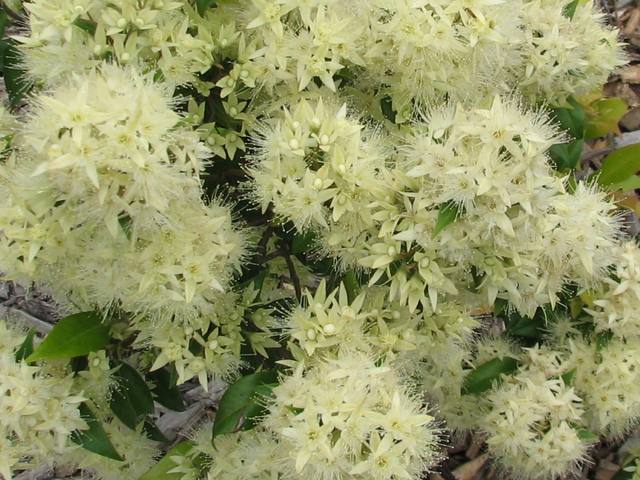
Crush a leaf and get liquorice; rare in the wild, easy in a pot, and a hedge you can brew.
Hardiness: zones 9 to 11
Light: part shade
Size: about 40 ft tall, 20 ft wide
Harvest: year-round
From: Subtropical rainforest of New South Wales
Here: Too tender to overwinter outdoors on the Lake Erie shore (zone 6b to 7a): grow it in a pot and bring it in, or treat it as an annual.
Good for: food, pollinators.
Native to: Australia. Hardy in zones 9 to 11.
The story
Anise myrtle, also called ringwood, grows wild only in a few valleys of northern New South Wales, where it is the country of the Gumbaynggirr and Dunghutti peoples. Its leaves hold one of the richest natural sources of the compound that gives aniseed its flavor.
Planting
Sun or part shade and moist, rich soil. It does well in a large pot.
Growing
Keep it watered. Clip it often: it makes a dense hedge, and the trimmings are the harvest.
Harvest and use
Use the leaves fresh or dried in tea, syrups, ice cream, biscuits and with pork or fish. Fluffy white flowers feed bees.
What to watch for
Frost when young. Myrtle rust on new growth in humid areas.
See if Anise myrtle fits your yard
Free planner: enter your ZIP for frost dates, climate fit and a sowing calendar. No account, no ads, no tracking cookies.
More perennial vegetables, greens and herbs
- Cretan dittany (diktamo)
- Bitter leaf
- Fluted pumpkin (ugu)
- Grains of paradise (alligator pepper)
- Uziza (West African pepper)
- Okazi (eru)
General guidance, not professional advice. Conditions vary by yard and year; for local specifics ask your county extension office. Never eat a wild plant you cannot identify with certainty. Traditional uses are shared as history, not medical advice. © 2026 Sean Priest · Irie Orchard. Terms & credits · Privacy · Home