Beet
Beta vulgaris
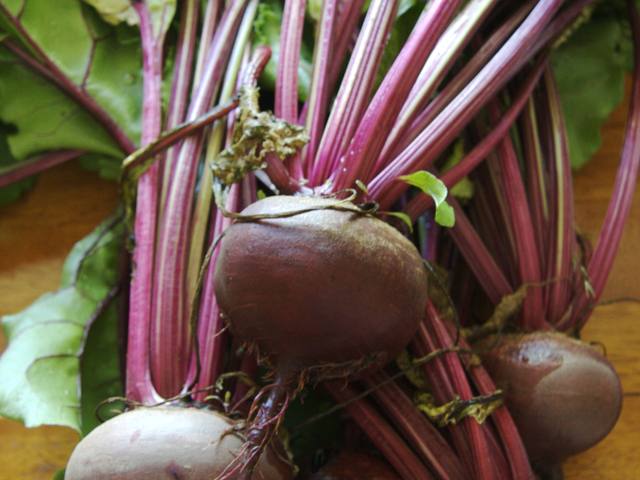
Each seed is a cluster; thin them and eat the thinnings.
Hardiness: zones 2 to 11
Light: full sun to part shade
Size: about 1 ft tall, 0.5 ft wide
Harvest: June to October
From: Mediterranean
Here: Hardy in the Lake Erie shore climate (zone 6b to 7a), so it can live outdoors in the ground.
Good for: food.
Native to: Temperate Europe, Mediterranean, Atlantic islands (Macaronesia). Hardy in zones 2 to 11.
The story
Beets were grown by the Greeks and Romans for their leaves; the swollen red root is a medieval and Renaissance development, and borscht made it the heart of Ukrainian and Russian cooking. Sugar beets, bred in Prussia in the 1700s, broke the cane sugar monopoly.
Planting
Full sun or light shade, loose soil without fresh manure; sow directly from early spring, every three weeks, half an inch deep. Each seed is a cluster, so thin.
Growing
Water steadily for tender roots; feed lightly. Thin to 3 inches and eat the thinnings as greens.
Harvest and use
Pull at golf-ball to tennis-ball size, 50 to 70 days; bigger gets woody. Greens are chard's twin. Autumn beets store for months.
What to watch for
Leafminers on the leaves, and boron deficiency making black spots inside.
See if Beet fits your yard
Free planner: enter your ZIP for frost dates, climate fit and a sowing calendar. No account, no ads, no tracking cookies.
More annual vegetables, herbs and grains
General guidance, not professional advice. Conditions vary by yard and year; for local specifics ask your county extension office. Never eat a wild plant you cannot identify with certainty. Traditional uses are shared as history, not medical advice. © 2026 Sean Priest · Irie Orchard. Terms & credits · Privacy · Home