Texas bluebonnet
Lupinus texensis
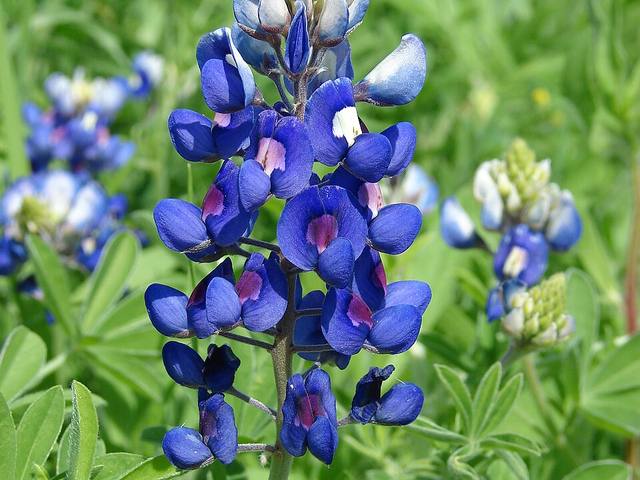
Sow in fall for spring roadsides of blue.
Hardiness: zones 7 to 10
Light: full sun
Size: about 1.5 ft tall, 1 ft wide
From: Texas
Drought-hardy once established
Here: Hardy in the Lake Erie shore climate (zone 6b to 7a), so it can live outdoors in the ground.
Good for: fixing nitrogen in the soil, pollinators.
Native to: Great Plains & Texas. Hardy in zones 7 to 10.
The story
The bluebonnet is the state flower of Texas, and Texans take it seriously. Seed has been sown along the highways since the 1930s, and stopping to photograph the family in a field of them is a spring ritual.
Planting
Sow in fall, in full sun and well-drained, alkaline soil. Scarified seed sprouts faster.
Growing
The seedlings sit as small rosettes all winter and bloom in March and April. Do not fertilize.
Harvest and use
Early nectar for bumblebees. Let the pods dry and pop before you mow, and the patch will return.
What to watch for
Poor drainage. The seeds are toxic if eaten.
See if Texas bluebonnet fits your yard
Free planner: enter your ZIP for frost dates, climate fit and a sowing calendar. No account, no ads, no tracking cookies.
More native and wild plants
- California poppy
- Foxglove beardtongue
- Rocky Mountain penstemon
- Blanket flower
- Lanceleaf coreopsis
- Golden Alexanders
General guidance, not professional advice. Conditions vary by yard and year; for local specifics ask your county extension office. Never eat a wild plant you cannot identify with certainty. Traditional uses are shared as history, not medical advice. © 2026 Sean Priest · Irie Orchard. Terms & credits · Privacy · Home