Blue elderberry
Sambucus cerulea
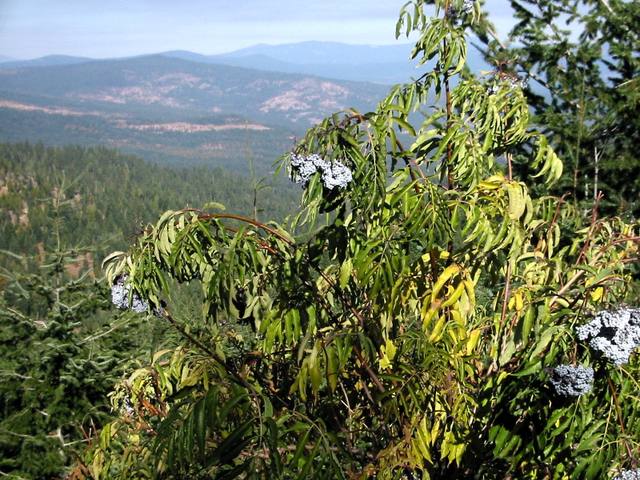
Powder-blue berries for syrup and wine; the elder of the West.
Hardiness: zones 5 to 10
Light: full sun to part shade
Size: about 20 ft tall, 20 ft wide
Harvest: August to September
From: W. North America
Drought-hardy once established
Here: Hardy in the Lake Erie shore climate (zone 6b to 7a), so it can live outdoors in the ground.
Good for: food, pollinators, wildlife, traditional use.
Native to: California, Pacific Northwest, Rockies & Great Basin, Desert Southwest, Western Canada. Hardy in zones 5 to 10.
The story
Blue elderberry was gathered by nearly every nation of the West, from the Cahuilla to the Nez Perce; the berries were dried for winter, the flowers made tea, and the hollow stems became flutes and clapper sticks that still play in California ceremonies. It is the elder of the Mexican and Western kitchens.
Planting
Full sun or part shade, moist to dry soil; drought-tolerant once established. Plant in spring; a 20-foot tree or shrub.
Growing
Water the first years, then little. Cut old stems to the ground every few years. Fast and tough.
Harvest and use
Flowers in late spring for fritters and cordial; berries in late summer, powder-blue, cooked for syrup, jam, wine and pie. Never eat berries raw or any stems or leaves.
What to watch for
Elder borer; raw berries upset stomachs.
Safety
Raw elderberries, unripe berries, seeds, leaves and stems can cause nausea and vomiting. Eat only ripe berries that have been cooked, and leave out the stems.
Medicinal uses here are shared as history, not advice. Kitchen amounts are fine for most people, but teas, tinctures and supplements can interact with medicines and aren't safe for everyone, especially in pregnancy, while breastfeeding, for children, or with liver or kidney problems. Ask a doctor or pharmacist before taking any plant as medicine.
See if Blue elderberry fits your yard
Free planner: enter your ZIP for frost dates, climate fit and a sowing calendar. No account, no ads, no tracking cookies.
More native and wild plants
General guidance, not professional advice. Conditions vary by yard and year; for local specifics ask your county extension office. Never eat a wild plant you cannot identify with certainty. Traditional uses are shared as history, not medical advice. © 2026 Sean Priest · Irie Orchard. Terms & credits · Privacy · Home