Bur oak
Quercus macrocarpa
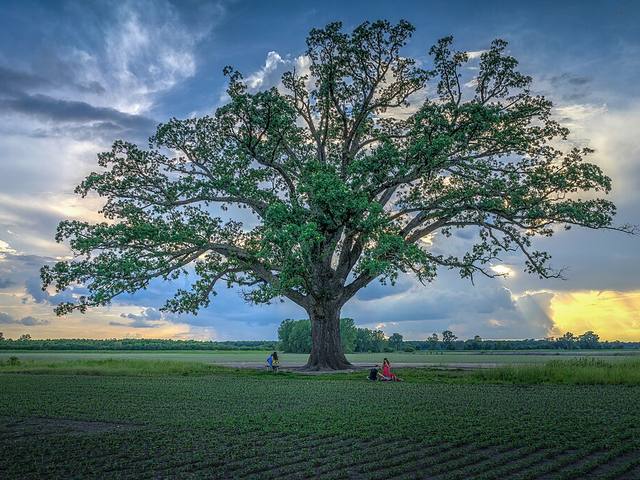
Corky bark shrugs off prairie fires and city streets alike.
Hardiness: zones 3 to 8
Light: full sun
Size: about 70 ft tall, 70 ft wide
From: Central North America
Drought-hardy once established
Here: Hardy in the Lake Erie shore climate (zone 6b to 7a), so it can live outdoors in the ground.
Good for: wildlife, butterfly and moth caterpillars.
Native to: Northeast, Midwest & Great Lakes, Great Plains & Texas, Southeast, Eastern Canada, Western Canada. Hardy in zones 3 to 8.
The story
Bur oak is the oak of the prairie edge. Its thick, corky bark let it survive the grass fires that swept the Midwest, so lone bur oaks dotted the open savanna that settlers called oak openings.
Planting
Full sun and room. It tolerates clay, drought, alkaline soil and city air. Plant it small; the taproot goes deep early.
Growing
Water young trees in drought, then leave it be. Prune in winter only.
Harvest and use
The biggest acorns of any North American oak, in shaggy fringed cups, relished by deer, turkeys and squirrels. A tree for the long view.
What to watch for
Oak wilt, though less prone than the red oaks. It grows slowly at first.
See if Bur oak fits your yard
Free planner: enter your ZIP for frost dates, climate fit and a sowing calendar. No account, no ads, no tracking cookies.
More native and wild plants
General guidance, not professional advice. Conditions vary by yard and year; for local specifics ask your county extension office. Never eat a wild plant you cannot identify with certainty. Traditional uses are shared as history, not medical advice. © 2026 Sean Priest · Irie Orchard. Terms & credits · Privacy · Home