Butiá (jelly palm)
Butia odorata
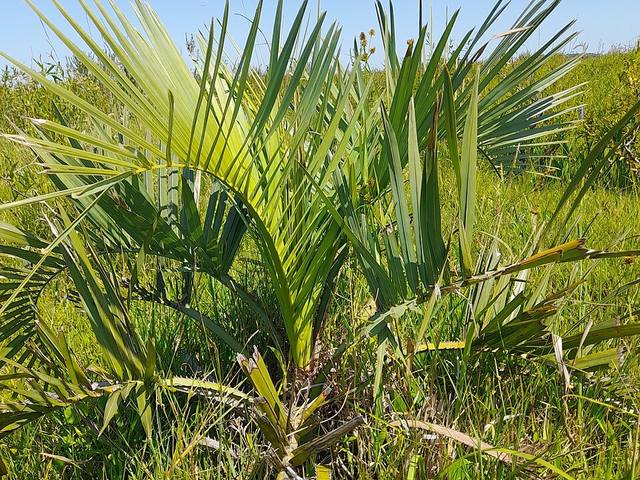
The hardiest feather palm, from the palm savannas of Rocha; its orange fruit makes jelly and a sweet liqueur.
Hardiness: zones 8 to 11
Light: full sun
Size: about 20 ft tall, 12 ft wide
Harvest: January to March
From: Uruguay and S. Brazil
Drought-hardy once established
Here: Too tender to overwinter outdoors on the Lake Erie shore (zone 6b to 7a): grow it in a pot and bring it in, or treat it as an annual.
Good for: food, wildlife.
Native to: Southern Cone & Patagonia, Atlantic Forest of Brazil. Hardy in zones 8 to 11.
The story
The butiá palm savannas of Rocha in Uruguay are centuries old, and local families still make jelly, ice cream and the liqueur caña con butiá from the fruit each summer. Before them, the Guaraní and Charrúa ate the fruit and the kernels.
Planting
Full sun and soil that drains well. It is among the cold-hardiest feather palms and takes drought, wind and salt.
Growing
Slow. Water young palms through summer and remove old fronds when brown.
Harvest and use
Great hanging bunches of orange fruit ripen in summer. They are sweet-tart and fibrous: chew and spit, or cook and strain for jelly.
What to watch for
Ripe fruit drops and draws wasps. Spines line the leaf stalks.
See if Butiá (jelly palm) fits your yard
Free planner: enter your ZIP for frost dates, climate fit and a sowing calendar. No account, no ads, no tracking cookies.
More tropical and subtropical food plants
General guidance, not professional advice. Conditions vary by yard and year; for local specifics ask your county extension office. Never eat a wild plant you cannot identify with certainty. Traditional uses are shared as history, not medical advice. © 2026 Sean Priest · Irie Orchard. Terms & credits · Privacy · Home