Forest grape (Cape grape)
Rhoicissus tomentosa
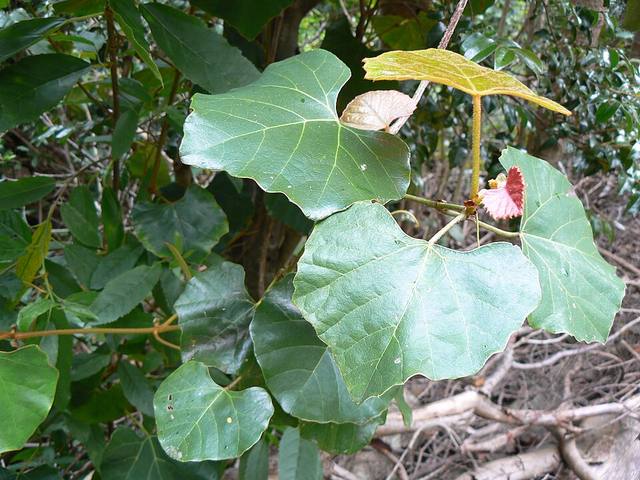
A vigorous evergreen climber with velvety new leaves and bunches of small dark grapes for jelly.
Hardiness: zones 9 to 11
Light: part shade
Size: about 40 ft tall, 10 ft wide
Harvest: February to April
From: Southern African forests
Here: Too tender to overwinter outdoors on the Lake Erie shore (zone 6b to 7a): grow it in a pot and bring it in, or treat it as an annual.
Good for: food, wildlife.
Native to: Cape of South Africa, African savannas & tropics. Hardy in zones 9 to 11.
The story
The forest grape hangs in the canopy of southern Africa's coastal and mountain forests. Its fruit is made into jelly and vinegar, and the tough stems were once used as rope and for binding thatch.
Planting
Part shade and moist, rich soil, with a strong tree or pergola to climb. It is frost-tender when young.
Growing
Vigorous once settled; prune in late winter to keep it in bounds.
Harvest and use
Bunches of small purple-black grapes ripen in late summer. They are tart: cook them for jelly or syrup.
What to watch for
It can smother a small tree. Birds and monkeys take the fruit.
See if Forest grape (Cape grape) fits your yard
Free planner: enter your ZIP for frost dates, climate fit and a sowing calendar. No account, no ads, no tracking cookies.
More native and wild plants
General guidance, not professional advice. Conditions vary by yard and year; for local specifics ask your county extension office. Never eat a wild plant you cannot identify with certainty. Traditional uses are shared as history, not medical advice. © 2026 Sean Priest · Irie Orchard. Terms & credits · Privacy · Home