Cassava
Manihot esculenta
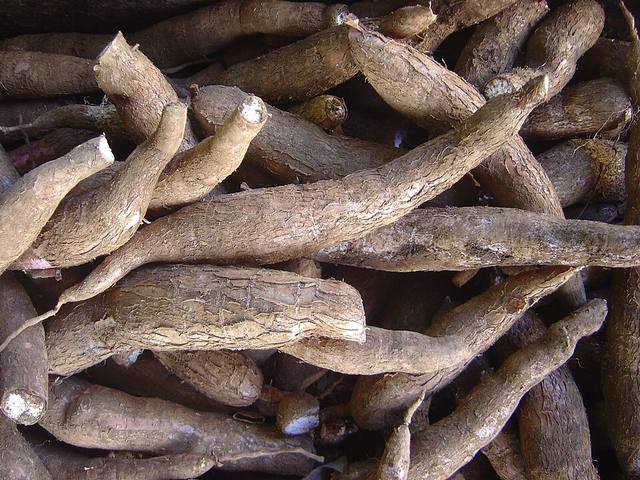
Drought-hardy roots; must be cooked properly.
Hardiness: zones 10 to 12
Light: full sun
Size: about 8 ft tall, 4 ft wide
Harvest: year-round
From: South America
Drought-hardy once established
Here: Too tender to overwinter outdoors on the Lake Erie shore (zone 6b to 7a): grow it in a pot and bring it in, or treat it as an annual.
Good for: food.
Native to: Tropical South America. Hardy in zones 10 to 12.
The story
Cassava was domesticated in the southern Amazon about 10,000 years ago and became the bread of tropical America; the Taíno and Tupi learned to grate, press and cook the bitter kinds to remove cyanide. Portuguese ships carried it to Africa, where it now feeds more people than anywhere.
Planting
Full sun, loose drained soil, heat, and eight months without frost. Plant foot-long stem cuttings horizontally in spring; it grows 8 feet tall.
Growing
Water modestly; it survives drought that kills other crops. Little feeding needed. Keep weeds down while young.
Harvest and use
Dig roots at 8 to 12 months, before frost. Peel and cook thoroughly; sweet varieties need only boiling, bitter ones grating and pressing. Young leaves are a cooked green.
What to watch for
Never eat it raw. Cassava mosaic virus in Africa and Asia; rot in waterlogged soil.
Safety
Raw cassava contains compounds that release cyanide. Always peel, soak and cook the roots thoroughly, and never eat them raw.
See if Cassava fits your yard
Free planner: enter your ZIP for frost dates, climate fit and a sowing calendar. No account, no ads, no tracking cookies.
More perennial vegetables, greens and herbs
General guidance, not professional advice. Conditions vary by yard and year; for local specifics ask your county extension office. Never eat a wild plant you cannot identify with certainty. Traditional uses are shared as history, not medical advice. © 2026 Sean Priest · Irie Orchard. Terms & credits · Privacy · Home