Date palm
Phoenix dactylifera
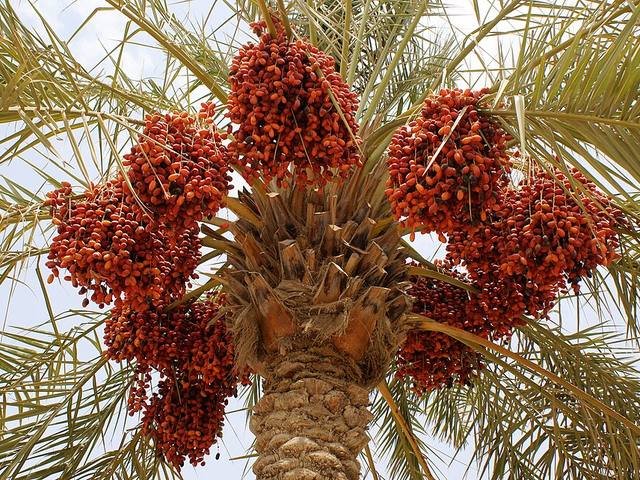
Ripens only with long, very hot, dry summers.
Hardiness: zones 9 to 11
Light: full sun
Size: about 50 ft tall, 20 ft wide
Harvest: September to November
From: Arabia and N. Africa
Drought-hardy once established
Here: Too tender to overwinter outdoors on the Lake Erie shore (zone 6b to 7a): grow it in a pot and bring it in, or treat it as an annual.
Good for: food.
Native to: Sahara & Arabian deserts. Hardy in zones 9 to 11.
The story
Dates have been cultivated in Mesopotamia and the Nile valley for more than 6,000 years, the staple of every desert caravan and the first fruit to break a Ramadan fast. Spanish missions planted them in California, and the Coachella Valley's groves began from Algerian offshoots in the 1900s.
Planting
Full sun, hot dry summers, and deep, drained soil; the saying is feet in water, head in fire. Plant a female offshoot of a named variety, plus a male or bought pollen.
Growing
Water deeply and regularly below the surface; hand-pollinate the female flowers in spring. Remove old fronds and thin the bunches.
Harvest and use
Dates ripen in late summer to autumn, from soft 'Medjool' to dry 'Deglet Noor'; bag the bunches against birds and rain and pick as they colour.
What to watch for
Humid summers rot the fruit; red palm weevil where present; frost on young palms.
See if Date palm fits your yard
Free planner: enter your ZIP for frost dates, climate fit and a sowing calendar. No account, no ads, no tracking cookies.
More tropical and subtropical food plants
General guidance, not professional advice. Conditions vary by yard and year; for local specifics ask your county extension office. Never eat a wild plant you cannot identify with certainty. Traditional uses are shared as history, not medical advice. © 2026 Sean Priest · Irie Orchard. Terms & credits · Privacy · Home