Feijoa (pineapple guava)
Acca sellowiana
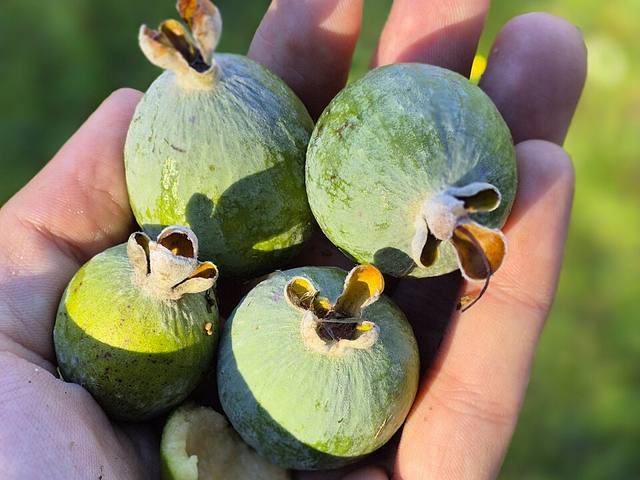
Edible flower petals; fine with cool summers.
Hardiness: zones 8 to 11
Light: full sun to part shade
Size: about 12 ft tall, 12 ft wide
Harvest: October to November
From: S. Brazil and Uruguay
Drought-hardy once established
Here: Too tender to overwinter outdoors on the Lake Erie shore (zone 6b to 7a): grow it in a pot and bring it in, or treat it as an annual.
Good for: food, pollinators.
Native to: Southern Cone & Patagonia, Atlantic Forest of Brazil. Hardy in zones 8 to 11.
The story
Feijoa grows wild in the hills of southern Brazil and Uruguay and was carried to France in 1890, then California and New Zealand, where it became a national backyard fruit. The perfumed white petals are edible and sweet.
Planting
Full sun or light shade, drained soil, and a cool-summer, light-frost climate; it dislikes humid heat. Plant two varieties for a better set, or a self-fertile type.
Growing
Water through dry summers while the fruit swells, mulch, and prune lightly after harvest. It makes a fine hedge.
Harvest and use
The fruit drops when ripe; gather daily from the ground in autumn. Scoop the jelly centre with a spoon, or slice skin and all for chutney.
What to watch for
Fruit fly where present, and scale; otherwise almost trouble-free.
See if Feijoa (pineapple guava) fits your yard
Free planner: enter your ZIP for frost dates, climate fit and a sowing calendar. No account, no ads, no tracking cookies.
More tropical and subtropical food plants
General guidance, not professional advice. Conditions vary by yard and year; for local specifics ask your county extension office. Never eat a wild plant you cannot identify with certainty. Traditional uses are shared as history, not medical advice. © 2026 Sean Priest · Irie Orchard. Terms & credits · Privacy · Home