Honeybush
Cyclopia intermedia
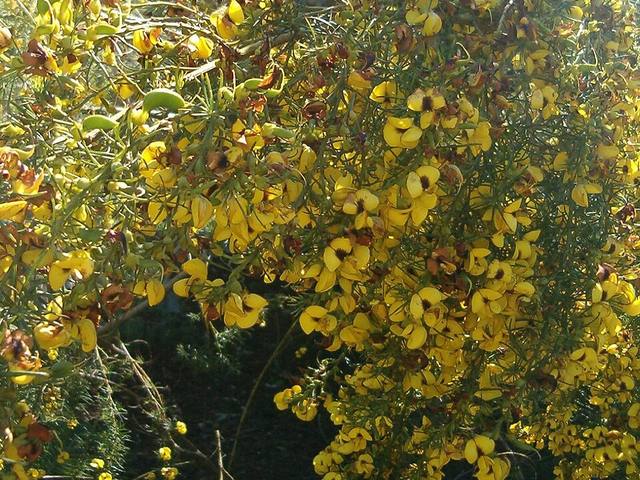
Yellow pea flowers that smell of honey; the fermented leaves and stems brew a sweet, caffeine-free tea.
Hardiness: zones 9 to 11
Light: full sun
Size: about 5 ft tall, 4 ft wide
Harvest: May to June
From: Eastern and Western Cape
Drought-hardy once established
Here: Too tender to overwinter outdoors on the Lake Erie shore (zone 6b to 7a): grow it in a pot and bring it in, or treat it as an annual.
Good for: food, fixing nitrogen in the soil, pollinators, traditional use.
Native to: Cape of South Africa. Hardy in zones 9 to 11.
The story
Honeybush tea was recorded in the Cape in the 1700s and was a home-gathered mountain drink for generations. It is still largely picked from the wild in the Langkloof, which has put pressure on the plants and prompted new farms.
Planting
Full sun and acid, sandy, well-drained soil. It likes cool roots and some summer moisture.
Growing
Cut back after harvest; several kinds resprout from the base. No fertiliser with phosphorus.
Harvest and use
Harvest leafy stems at or just after flowering, chop, ferment warm for a day or two, and dry. Simmer the tea; it does not turn bitter.
What to watch for
Seed needs smoke or scratching to sprout. It fails in clay and lime.
Safety
Medicinal uses here are shared as history, not advice. Kitchen amounts are fine for most people, but teas, tinctures and supplements can interact with medicines and aren't safe for everyone, especially in pregnancy, while breastfeeding, for children, or with liver or kidney problems. Ask a doctor or pharmacist before taking any plant as medicine.
See if Honeybush fits your yard
Free planner: enter your ZIP for frost dates, climate fit and a sowing calendar. No account, no ads, no tracking cookies.
More perennial vegetables, greens and herbs
General guidance, not professional advice. Conditions vary by yard and year; for local specifics ask your county extension office. Never eat a wild plant you cannot identify with certainty. Traditional uses are shared as history, not medical advice. © 2026 Sean Priest · Irie Orchard. Terms & credits · Privacy · Home