Horseradish
Armoracia rusticana
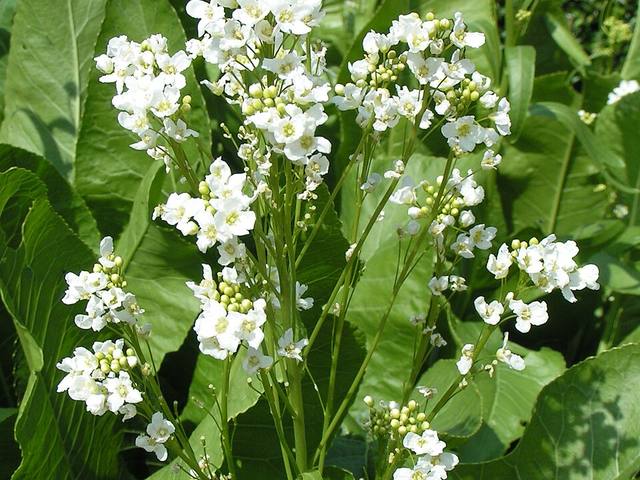
A fierce white root grated for sauce; it comes back from any scrap, so give it a corner of its own.
Hardiness: zones 3 to 9
Light: full sun to part shade
Size: about 3 ft tall, 2 ft wide
Harvest: October to March
From: SE Europe and W. Asia
Here: Hardy in the Lake Erie shore climate (zone 6b to 7a), so it can live outdoors in the ground.
Good for: food.
Native to: Temperate Europe, Central Asian steppe. Hardy in zones 3 to 9.
The story
Horseradish has been grated for its heat in Central and Eastern Europe since the Middle Ages, and it is one of the bitter herbs of the Passover table. The bite appears only when the root is crushed.
Planting
Sun or part shade and deep soil. Plant pencil-thick root pieces at a slant in spring.
Growing
It needs no care. Grow it in a bottomless tub or a corner where spreading does not matter.
Harvest and use
Dig roots from autumn to early spring. Peel and grate with a window open, then add vinegar after a few minutes to fix the heat.
What to watch for
Any root left behind regrows. The fumes sting the eyes.
See if Horseradish fits your yard
Free planner: enter your ZIP for frost dates, climate fit and a sowing calendar. No account, no ads, no tracking cookies.
More perennial vegetables, greens and herbs
General guidance, not professional advice. Conditions vary by yard and year; for local specifics ask your county extension office. Never eat a wild plant you cannot identify with certainty. Traditional uses are shared as history, not medical advice. © 2026 Sean Priest · Irie Orchard. Terms & credits · Privacy · Home