Ingá (ingá-banana)
Inga vera
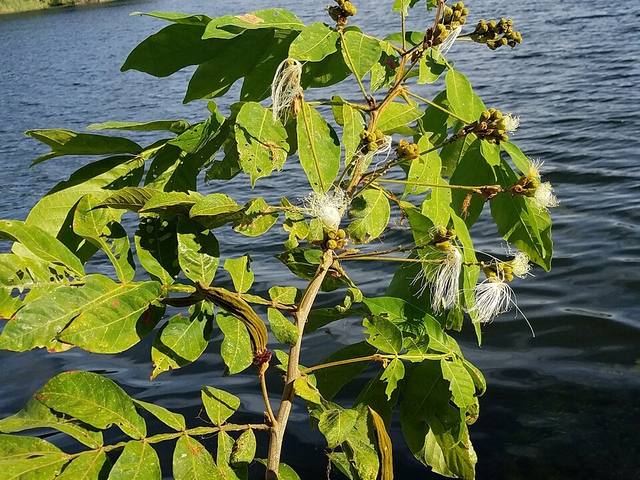
A riverside legume that feeds the soil, the hummingbirds and you: sweet white pulp in long green pods.
Hardiness: zones 10 to 12
Light: full sun
Size: about 30 ft tall, 30 ft wide
Harvest: April to August
From: Streambanks from the Caribbean to southern Brazil
Here: Too tender to overwinter outdoors on the Lake Erie shore (zone 6b to 7a): grow it in a pot and bring it in, or treat it as an annual.
Good for: food, fixing nitrogen in the soil, pollinators, wildlife.
Native to: Atlantic Forest of Brazil, Mexico, Central America & the Caribbean. Hardy in zones 10 to 12.
The story
Ingás are the streamside legumes of Latin American gardens, and their pods are a classic children's snack. Inga vera lines rivers from the Caribbean to the Paraná basin and is used to restore eroded banks.
Planting
Full sun, almost any moist soil; ideal along a stream or pond edge. Fast from fresh seed.
Growing
Fast-growing and nitrogen-fixing: prune it hard and drop the cuttings as mulch to feed nearby fruit trees.
Harvest and use
Long pods hold seeds wrapped in sweet, cottony white pulp; suck the pulp and spit the seeds. Flowers feed hummingbirds and bees.
What to watch for
Only the pulp is eaten, not the seeds. Grows big quickly, so keep it away from gutters and septic lines.
See if Ingá (ingá-banana) fits your yard
Free planner: enter your ZIP for frost dates, climate fit and a sowing calendar. No account, no ads, no tracking cookies.
More tropical and subtropical food plants
General guidance, not professional advice. Conditions vary by yard and year; for local specifics ask your county extension office. Never eat a wild plant you cannot identify with certainty. Traditional uses are shared as history, not medical advice. © 2026 Sean Priest · Irie Orchard. Terms & credits · Privacy · Home