Malabar tamarind (kudampuli)
Garcinia gummi-gutta
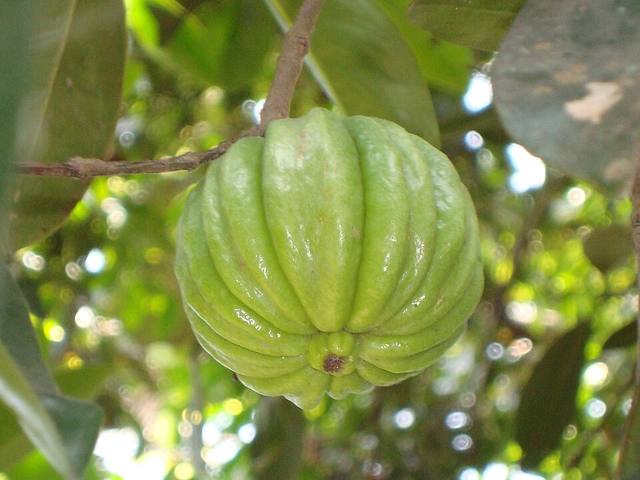
Its smoked, sour rind gives Kerala fish curry its tang.
Hardiness: zones 10 to 12
Light: part shade
Size: about 40 ft tall, 20 ft wide
Harvest: June to August
From: Western Ghats of India
Here: Too tender to overwinter outdoors on the Lake Erie shore (zone 6b to 7a): grow it in a pot and bring it in, or treat it as an annual.
Good for: food.
Native to: South & Southeast Asian tropics. Hardy in zones 10 to 12.
The story
Kudampuli, the Malabar tamarind, has soured the fish curries of Kerala for centuries, its rind smoked and dried over the kitchen fire until black; it is a Garcinia cousin of mangosteen and kokum, and the source of the diet supplement that briefly made it famous.
Planting
Part shade, rich, moist soil, heat and humidity; a 40-foot forest tree. Plant a seedling or grafted tree in the wet tropics.
Growing
Keep moist and mulched; shelter young trees. Minimal pruning.
Harvest and use
Fruit ripens yellow in the monsoon; cut the rind into pieces and sun- or smoke-dry until black and leathery. Soak before cooking.
What to watch for
Drought and cold.
See if Malabar tamarind (kudampuli) fits your yard
Free planner: enter your ZIP for frost dates, climate fit and a sowing calendar. No account, no ads, no tracking cookies.
More tropical and subtropical food plants
General guidance, not professional advice. Conditions vary by yard and year; for local specifics ask your county extension office. Never eat a wild plant you cannot identify with certainty. Traditional uses are shared as history, not medical advice. © 2026 Sean Priest · Irie Orchard. Terms & credits · Privacy · Home