Bush mango (ogbono)
Irvingia gabonensis
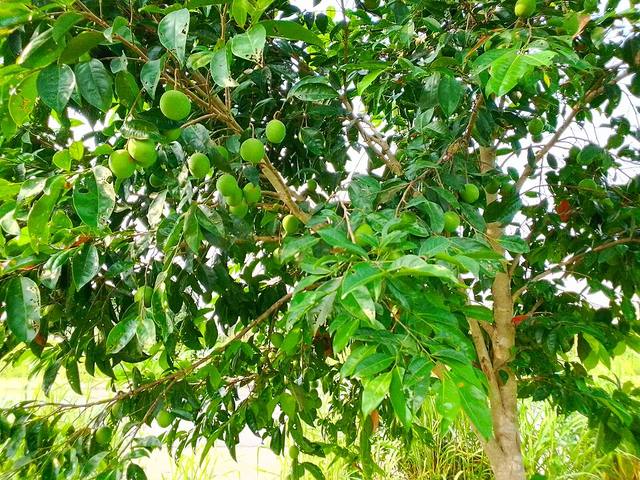
Mango-like fruit eaten fresh; the seeds are ground into ogbono, the stretchy thickener of West African soups.
Hardiness: zones 11 to 12
Light: full sun
Size: about 80 ft tall, 40 ft wide
Harvest: June to September
From: Forests from Nigeria to Gabon
Here: Too tender to overwinter outdoors on the Lake Erie shore (zone 6b to 7a): grow it in a pot and bring it in, or treat it as an annual.
Good for: food, wildlife.
Native to: West & Central African forests. Hardy in zones 11 to 12.
The story
Bush mango grows wild in the rain forests from Nigeria to Gabon. Its fruit is eaten fresh, but the prize is the seed: dried, cracked and ground, it becomes ogbono, the thickener that gives draw soup its stretch. Gathering and trading the seeds is income for forest families in Cameroon and Nigeria.
Planting
Full sun, deep moist forest soil, frost-free and humid. Grow from fresh seed; grafted trees bear in about five years instead of ten.
Growing
A slow giant: give it the far edge of the land. Mulch heavily and keep young trees watered through the dry season.
Harvest and use
Fruit in the rainy season; split the stones, dry the kernels in the sun and grind them for soup.
What to watch for
Becomes an 80-ft tree, so it suits a farm or a big compound, not a small yard.
See if Bush mango (ogbono) fits your yard
Free planner: enter your ZIP for frost dates, climate fit and a sowing calendar. No account, no ads, no tracking cookies.
More tropical and subtropical food plants
- Calabash nutmeg (ehuru)
- African oil bean (ugba)
- Robusta coffee
- Prekese (aidan fruit)
- Velvet tamarind (yoyi)
- African breadfruit (ukwa)
General guidance, not professional advice. Conditions vary by yard and year; for local specifics ask your county extension office. Never eat a wild plant you cannot identify with certainty. Traditional uses are shared as history, not medical advice. © 2026 Sean Priest · Irie Orchard. Terms & credits · Privacy · Home