Salmonberry
Rubus spectabilis
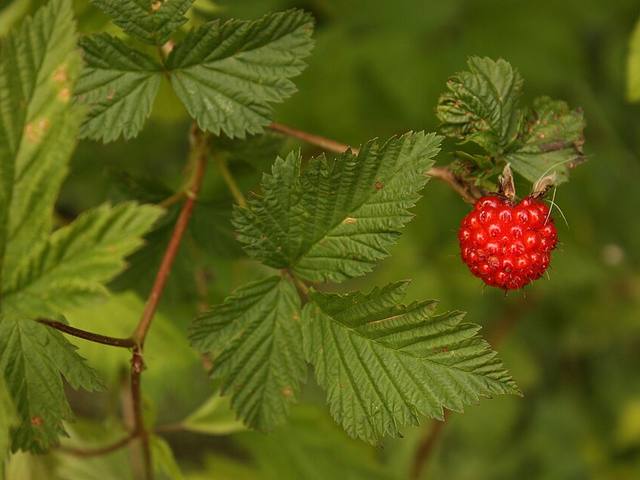
One of the first berries of the year; hummingbirds love the flowers.
Hardiness: zones 5 to 9
Light: part shade
Size: about 8 ft tall, 6 ft wide
Harvest: June to July
From: Pacific coast
Here: Hardy in the Lake Erie shore climate (zone 6b to 7a), so it can live outdoors in the ground.
Good for: food, pollinators, wildlife.
Native to: Pacific Northwest, California, Alaska, Western Canada. Hardy in zones 5 to 9.
The story
Salmonberry is the first fruit of the Northwest spring, and the Coast Salish and Tlingit ate the peeled young shoots as a vegetable in April and the berries in June, timed by the song of the Swainson's thrush, the salmonberry bird. The colour of the fruit matches the fish.
Planting
Part shade, moist to wet soil; it lines streams. Plant in spring; the thorny canes spread by rhizome into a tall thicket.
Growing
Keep moist, which is rarely a problem where it grows. Thin old canes. It is aggressive; give it the damp corner.
Harvest and use
Berries ripen salmon-orange to red in early summer, soft and mild; eat fresh. Young shoots in spring, peeled and eaten raw or steamed.
What to watch for
Its own spread; nothing much else.
See if Salmonberry fits your yard
Free planner: enter your ZIP for frost dates, climate fit and a sowing calendar. No account, no ads, no tracking cookies.
More native and wild plants
General guidance, not professional advice. Conditions vary by yard and year; for local specifics ask your county extension office. Never eat a wild plant you cannot identify with certainty. Traditional uses are shared as history, not medical advice. © 2026 Sean Priest · Irie Orchard. Terms & credits · Privacy · Home