Tamarind
Tamarindus indica
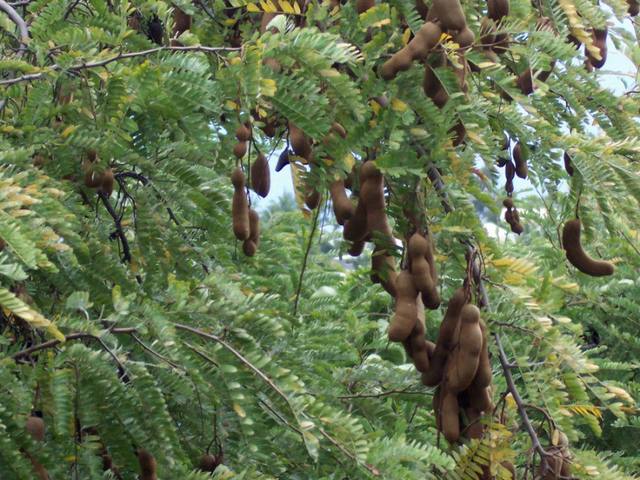
Sweet-sour pods for chutney and drinks.
Hardiness: zones 10 to 12
Light: full sun
Size: about 50 ft tall, 40 ft wide
Harvest: February to April
From: Tropical Africa
Drought-hardy once established
Here: Too tender to overwinter outdoors on the Lake Erie shore (zone 6b to 7a): grow it in a pot and bring it in, or treat it as an annual.
Good for: food, fixing nitrogen in the soil.
Native to: African savannas & tropics. Hardy in zones 10 to 12.
The story
Tamarind came out of tropical Africa and reached India so long ago that its name means Indian date in Arabic; it sours curries, chutneys and the drinks of Mexico, where the Spanish brought it in the 1500s. The pods keep for years.
Planting
Full sun, drained soil, heat, and a dry season; it tolerates drought and salt. Plant a grafted sweet or sour variety; a huge, slow tree, so give it space.
Growing
Water young trees, then nothing; it is a dry-tropics tree. No pruning beyond shaping. It takes years to bear and then bears for centuries.
Harvest and use
Pods ripen brown and brittle in the dry season; crack the shell and pull the sticky pulp off the seeds. Store as a block or make paste.
What to watch for
Humid cold, and little else.
See if Tamarind fits your yard
Free planner: enter your ZIP for frost dates, climate fit and a sowing calendar. No account, no ads, no tracking cookies.
More tropical and subtropical food plants
General guidance, not professional advice. Conditions vary by yard and year; for local specifics ask your county extension office. Never eat a wild plant you cannot identify with certainty. Traditional uses are shared as history, not medical advice. © 2026 Sean Priest · Irie Orchard. Terms & credits · Privacy · Home