Camellia (tsubaki)
Camellia japonica
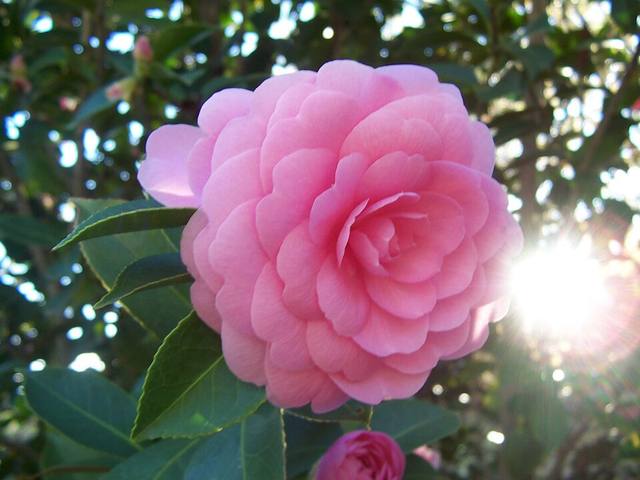
Red winter blooms for white-eyes and bulbuls; the pressed seeds give tsubaki oil, the Izu Islands' cooking and hair oil.
Hardiness: zones 7 to 9
Light: part shade
Size: about 20 ft tall, 12 ft wide
Harvest: September to October
From: Japan, Korea and Taiwan
Here: Hardy in the Lake Erie shore climate (zone 6b to 7a), so it can live outdoors in the ground.
Good for: food, pollinators, wildlife.
Native to: Japan & its islands, East Asia. Hardy in zones 7 to 9.
The story
Camellia japonica grows wild on Japan's coasts and islands. On Izu Oshima and Hachijo-jima the seeds have long been pressed for tsubaki oil, used in cooking and as a hair oil, and the winter flowers feed white-eyes and bulbuls when little else is blooming.
Planting
Part shade, acid, well-drained soil rich in leaf mould. Plant a nursery shrub.
Growing
Slow and long-lived; it makes a good windbreak on salty coasts. Prune after flowering.
Harvest and use
Collect the round seed capsules in autumn and press the seeds for oil.
What to watch for
Prefers shelter from hot afternoon sun. Watch for tea scale under the leaves.
See if Camellia (tsubaki) fits your yard
Free planner: enter your ZIP for frost dates, climate fit and a sowing calendar. No account, no ads, no tracking cookies.
More native and wild plants
- Azores laurel (louro)
- Azores juniper (cedro-do-mato)
- Canary strawberry tree (madroño canario)
- Dragon tree (drago)
- Canary Island date palm
- Mocán
General guidance, not professional advice. Conditions vary by yard and year; for local specifics ask your county extension office. Never eat a wild plant you cannot identify with certainty. Traditional uses are shared as history, not medical advice. © 2026 Sean Priest · Irie Orchard. Terms & credits · Privacy · Home