Tulsi (holy basil)
Ocimum tenuiflorum
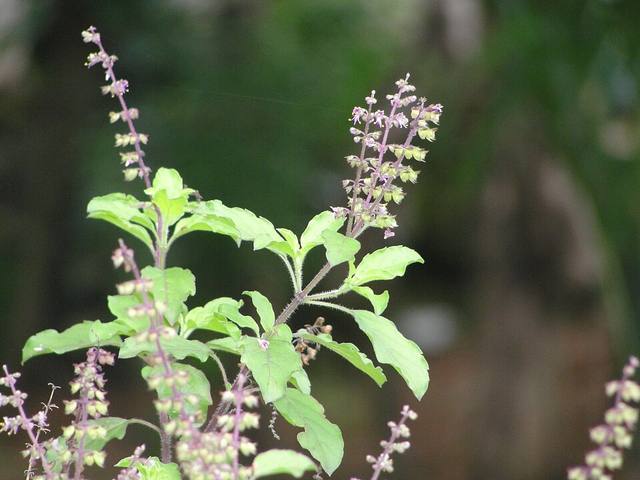
The courtyard herb of every Indian home: tea, medicine, bees. Grow as an annual where it frosts.
Hardiness: zones 9 to 12
Light: full sun
Size: about 2 ft tall, 2 ft wide
Harvest: year-round
From: India
Drought-hardy once established
Here: Too tender to overwinter outdoors on the Lake Erie shore (zone 6b to 7a): grow it in a pot and bring it in, or treat it as an annual.
Good for: food, pollinators, traditional use, Ayurvedic tradition.
Native to: South & Southeast Asian tropics. Hardy in zones 9 to 12.
The story
Tulsi, holy basil, grows in the courtyard of nearly every Hindu home, worshipped each evening as the goddess Lakshmi and brewed as a tea for coughs, fevers and the mind; Ayurveda calls it the incomparable one. The Thai use a close relative in pad kra pao.
Planting
Full sun, drained soil, and warmth; grow as an annual where it frosts. Sow seed on the surface after frost or set out plants; a 2-foot bushy herb.
Growing
Water modestly, pinch to keep it bushy, and let it flower for the bees; it self-sows in warm places.
Harvest and use
Pick leaves any time for tea, fresh or dried; harvest stems before flowering to dry. Clove-scented and peppery.
What to watch for
Frost; downy mildew in humid weather.
Safety
Medicinal uses here are shared as history, not advice. Kitchen amounts are fine for most people, but teas, tinctures and supplements can interact with medicines and aren't safe for everyone, especially in pregnancy, while breastfeeding, for children, or with liver or kidney problems. Ask a doctor or pharmacist before taking any plant as medicine.
See if Tulsi (holy basil) fits your yard
Free planner: enter your ZIP for frost dates, climate fit and a sowing calendar. No account, no ads, no tracking cookies.
More perennial vegetables, greens and herbs
- Drumstick (moringa, for pods)
- Timur (Nepal pepper)
- Large cardamom
- Tree collards
- Lemon verbena
- Achiote (annatto)
General guidance, not professional advice. Conditions vary by yard and year; for local specifics ask your county extension office. Never eat a wild plant you cannot identify with certainty. Traditional uses are shared as history, not medical advice. © 2026 Sean Priest · Irie Orchard. Terms & credits · Privacy · Home