Aibika (island cabbage)
Abelmoschus manihot
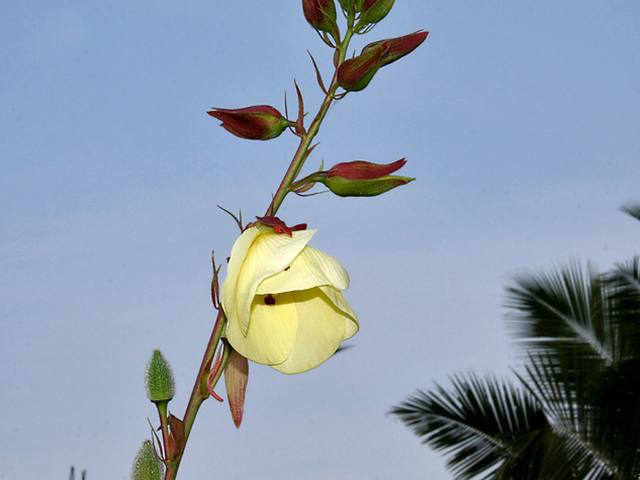
A hibiscus relative grown for its soft leaves, cooked in coconut milk; one of the most nutritious greens in Melanesia.
Hardiness: zones 10 to 12
Light: full sun to part shade
Size: about 6 ft tall, 4 ft wide
Harvest: year-round
From: New Guinea, the Pacific and Southeast Asia
Here: Too tender to overwinter outdoors on the Lake Erie shore (zone 6b to 7a): grow it in a pot and bring it in, or treat it as an annual.
Good for: food, pollinators.
Native to: New Guinea & Melanesia, Hawaiʻi & Pacific Islands, South & Southeast Asian tropics. Hardy in zones 10 to 12.
The story
Aibika, also called slippery cabbage or island cabbage, is one of the most widely grown greens in Melanesia. It is high in protein, iron and vitamins, and village gardens keep a hedge of it by the house.
Planting
Full sun or light shade, rich moist soil. Grows easily from stem cuttings.
Growing
Pinch the tips often; it bushes out and crops for years. Cut back old plants and replant cuttings.
Harvest and use
Pick young leaves and tips year-round; cook in coconut milk or add to stews.
What to watch for
Leaves turn slippery when cooked, which some cooks prize and some don't. Frost-tender.
See if Aibika (island cabbage) fits your yard
Free planner: enter your ZIP for frost dates, climate fit and a sowing calendar. No account, no ads, no tracking cookies.
More perennial vegetables, greens and herbs
General guidance, not professional advice. Conditions vary by yard and year; for local specifics ask your county extension office. Never eat a wild plant you cannot identify with certainty. Traditional uses are shared as history, not medical advice. © 2026 Sean Priest · Irie Orchard. Terms & credits · Privacy · Home