Asian pear
Pyrus pyrifolia
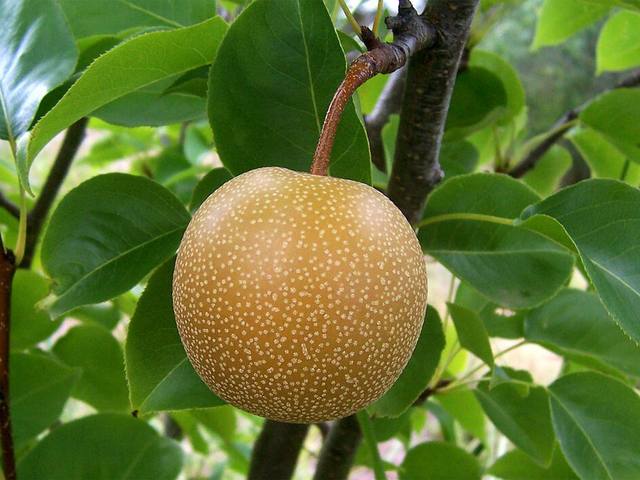
Crisp like an apple and ripens on the tree.
Hardiness: zones 5 to 9
Light: full sun
Size: about 15 ft tall, 12 ft wide
Harvest: August to September
From: China, Korea and Japan
Here: Hardy in the Lake Erie shore climate (zone 6b to 7a), so it can live outdoors in the ground.
Good for: food, pollinators.
Native to: East Asia. Hardy in zones 5 to 9.
The story
Nashi pears have been grown in China for at least 3,000 years and reached Japan early; the crisp, round fruit with a pear's perfume is the one sold wrapped in foam netting in every East Asian market. Chinese and Japanese immigrants carried seed to California in the 1800s.
Planting
Plant in full sun with a second Asian pear or a European pear as a pollinator. They tolerate heavier soil than European pears but hate standing water.
Growing
Thin hard, to one fruit per spur, or you get hundreds of small ones. Light summer pruning keeps the tree open; they bear on long-lived spurs.
Harvest and use
Unlike European pears they ripen on the tree: pick when the skin turns from green to gold or russet and the fruit comes off with a slight twist. Eat crisp and cold.
What to watch for
Fire blight, codling moth, and birds; a bagged fruit is a clean fruit, which is why the Japanese do it.
See if Asian pear fits your yard
Free planner: enter your ZIP for frost dates, climate fit and a sowing calendar. No account, no ads, no tracking cookies.
More fruit trees
General guidance, not professional advice. Conditions vary by yard and year; for local specifics ask your county extension office. Never eat a wild plant you cannot identify with certainty. Traditional uses are shared as history, not medical advice. © 2026 Sean Priest · Irie Orchard. Terms & credits · Privacy · Home