Plum
Prunus salicina, P. domestica
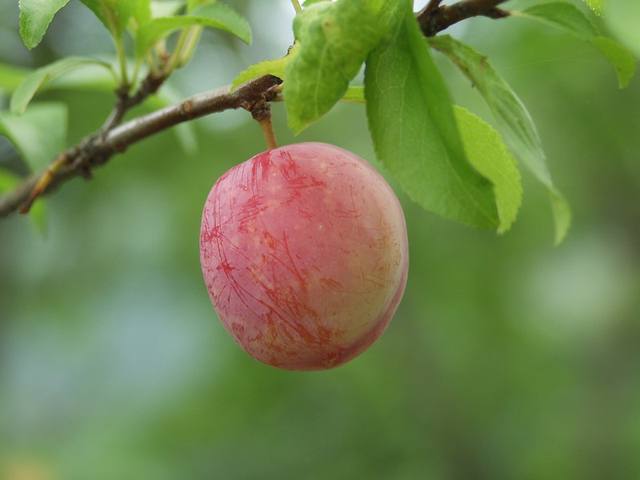
Japanese types bloom early; European types hang on later.
Hardiness: zones 4 to 9
Light: full sun
Size: about 12 ft tall, 12 ft wide
Harvest: July to September
From: China and Europe
Here: Hardy in the Lake Erie shore climate (zone 6b to 7a), so it can live outdoors in the ground.
Good for: food, pollinators.
Hardy in zones 4 to 9.
The story
Japanese plums come from China. 'Bruce' crosses one with the Chickasaw plum (Prunus angustifolia), native to the southern US, and was introduced in Texas in 1921. Bruce is often grown in the South for its tough, disease-tolerant tree.
Planting
Full sun, 8 hours. Soil: fertile, well-drained (pH 6.0–6.8). Spacing: 15 ft. Pollination: 'Bruce' needs a different Japanese-type plum blooming at the same time. Your 'Methley' is the classic partner, so you're covered.
Growing
Water: regular watering the first 2 years, then during drought. Winter: Prune lightly in late winter. Cut out any black knot (hard black swellings) 4 in below the gall. Spring: Blooms very early, so frost can take the crop. Summer: Thin fruit to 4–5 in apart. Fall: Rake up leaves and dropped fruit.
Harvest and use
Harvest: July (very early plum). First crop: 3–4 years.
What to watch for
Black knot (common in Ohio), plum curculio, brown rot.
See if Plum fits your yard
Free planner: enter your ZIP for frost dates, climate fit and a sowing calendar. No account, no ads, no tracking cookies.
More fruit trees
General guidance, not professional advice. Conditions vary by yard and year; for local specifics ask your county extension office. Never eat a wild plant you cannot identify with certainty. Traditional uses are shared as history, not medical advice. © 2026 Sean Priest · Irie Orchard. Terms & credits · Privacy · Home