Medlar
Mespilus germanica
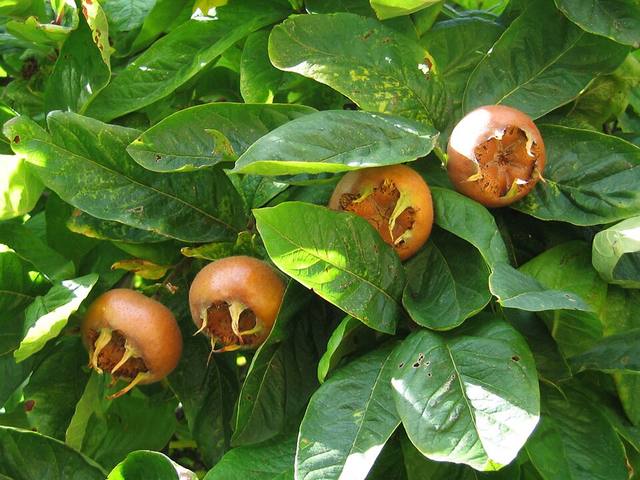
Eaten soft after frost; a medieval favorite.
Hardiness: zones 5 to 8
Light: full sun to part shade
Size: about 15 ft tall, 15 ft wide
Harvest: October to November
From: SW Asia and Europe
Here: Hardy in the Lake Erie shore climate (zone 6b to 7a), so it can live outdoors in the ground.
Good for: food.
Native to: Mediterranean, Caucasus. Hardy in zones 5 to 8.
The story
The medlar came to Western Europe with the Romans and was a staple of medieval gardens, eaten after frost had softened it, a process called bletting. Chaucer and Shakespeare both made jokes about it; it fell out of fashion once sugar made sweeter fruit easy.
Planting
Plant in full sun or light shade in any decent soil; self-fertile and slow, reaching 15 feet with a spreading, crooked habit worth keeping.
Growing
Almost no care: water in the first summers, mulch, and prune only to remove crossing limbs. The large white flowers come in late spring.
Harvest and use
Pick after the first frosts in late autumn and store stem-up in a cool room until the flesh goes brown and soft; then it tastes of spiced apple butter.
What to watch for
Hardly anything; occasional leaf spot, and birds once the fruit blets on the tree.
See if Medlar fits your yard
Free planner: enter your ZIP for frost dates, climate fit and a sowing calendar. No account, no ads, no tracking cookies.
More fruit trees
General guidance, not professional advice. Conditions vary by yard and year; for local specifics ask your county extension office. Never eat a wild plant you cannot identify with certainty. Traditional uses are shared as history, not medical advice. © 2026 Sean Priest · Irie Orchard. Terms & credits · Privacy · Home