Fig
Ficus carica
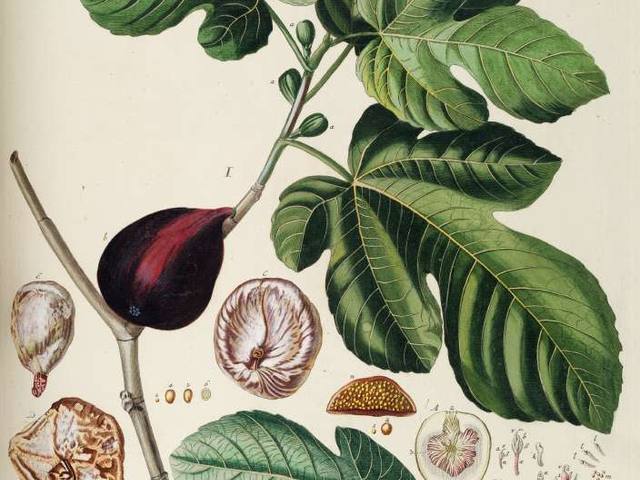
Cold-hardy kinds regrow from the roots after hard winters.
Hardiness: zones 7 to 11
Light: full sun
Size: about 12 ft tall, 12 ft wide
Harvest: July to September
From: SW Asia
Drought-hardy once established
Here: Hardy in the Lake Erie shore climate (zone 6b to 7a), so it can live outdoors in the ground.
Good for: food.
Native to: Mediterranean, Caucasus. Hardy in zones 7 to 11.
The story
Western Asia and the Mediterranean. A fig isn't botanically a fruit. It's an inside-out flower cluster.
Planting
Full sun, warm wall ideal. Soil: well-drained (pH 6.0–7.5). Spacing: 6–8 ft. Pollination: self-fertile: no second fig or pollinator needed.
Growing
Water: regular in summer. Winter: After the leaves drop, pile 12 in of shredded leaves or straw over the base (a wire cage holds it). Chicago Hardy stems are hardy to about 10°F; the roots to about −20°F. Spring: Pull the mulch back in late April. Wait to prune until new buds show, then cut out dead wood. Leaf-out is late, so don't give up on it. Summer: Water in dry spells. Even if winter killed the tops, the new shoots fruit this same season. Fall: Pick when soft and drooping at the neck. Brown-purple skin, sweet pink-red inside.
Harvest and use
Harvest: August to frost (main crop on this year's new wood). First crop: 2–3 years after planting.
What to watch for
Winter dieback of stems (normal), late frosts on new shoots, birds and wasps on ripe figs.
See if Fig fits your yard
Free planner: enter your ZIP for frost dates, climate fit and a sowing calendar. No account, no ads, no tracking cookies.
More fruit trees
General guidance, not professional advice. Conditions vary by yard and year; for local specifics ask your county extension office. Never eat a wild plant you cannot identify with certainty. Traditional uses are shared as history, not medical advice. © 2026 Sean Priest · Irie Orchard. Terms & credits · Privacy · Home