Pawpaw
Asimina triloba
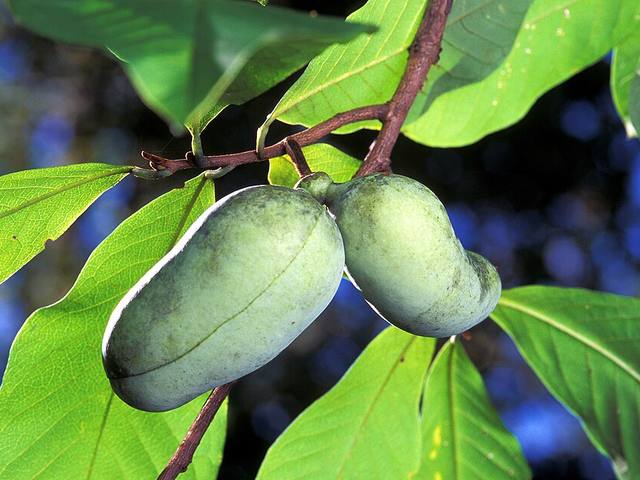
North America's biggest native fruit; needs a partner tree.
Hardiness: zones 5 to 8
Light: part shade
Size: about 18 ft tall, 12 ft wide
Harvest: August to September
From: E. North America
Here: Hardy in the Lake Erie shore climate (zone 6b to 7a), so it can live outdoors in the ground.
Good for: food, butterfly and moth caterpillars.
Native to: Northeast, Southeast, Midwest & Great Lakes, Eastern Canada. Hardy in zones 5 to 8.
The story
Native to eastern North America, including all of Ohio. Ohio named it the state's native fruit. North America's largest native fruit. It tastes like banana-mango custard.
Planting
Shade the first 1–2 years, then sun for fruit. Soil: rich, moist, well-drained (pH 5.5–7.0). Spacing: 8–15 ft. Pollination: needs two genetically different trees. Flies and beetles pollinate the purple flowers.
Growing
Water: keep moist; it doesn't like drying out. Winter: Almost no pruning. Remove root suckers if you don't want a thicket. Spring: Flowers are dark purple and slightly stinky, which draws flies. Summer: Shade young trunks from hot sun. Fall: Fruit is ripe when it yields like a ripe peach. It bruises fast.
Harvest and use
Harvest: September. First crop: 4–7 years.
What to watch for
Very few pests. The zebra swallowtail caterpillar feeds only on pawpaw.
See if Pawpaw fits your yard
Free planner: enter your ZIP for frost dates, climate fit and a sowing calendar. No account, no ads, no tracking cookies.
More fruit trees
General guidance, not professional advice. Conditions vary by yard and year; for local specifics ask your county extension office. Never eat a wild plant you cannot identify with certainty. Traditional uses are shared as history, not medical advice. © 2026 Sean Priest · Irie Orchard. Terms & credits · Privacy · Home