Prickly pear
Opuntia ficus-indica
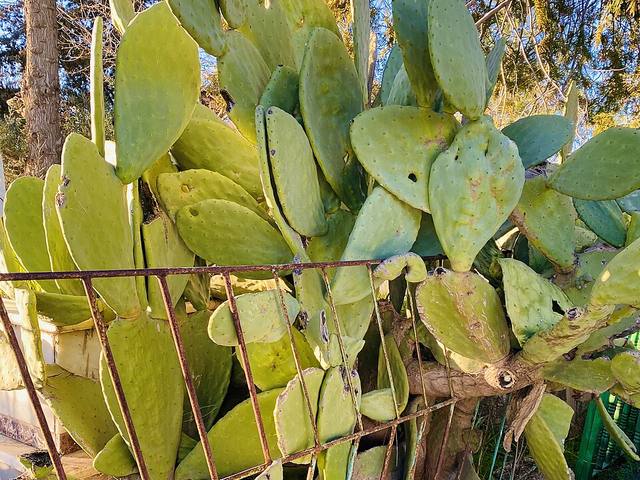
Pads (nopales) and fruit (tunas) are both eaten.
Hardiness: zones 8 to 11
Light: full sun
Size: about 8 ft tall, 8 ft wide
Harvest: August to October
From: Mexico
Drought-hardy once established
Here: Too tender to overwinter outdoors on the Lake Erie shore (zone 6b to 7a): grow it in a pot and bring it in, or treat it as an annual.
Good for: food, pollinators.
Native to: Mexico, Central America & the Caribbean. Hardy in zones 8 to 11.
The story
Nopal was a staple of Mexico long before the Aztec, whose capital's name, Tenochtitlan, refers to a cactus growing from a rock; it feeds people, cattle and cochineal insects alike. Spanish ships carried it around the world, and Sicily and North Africa made it their own.
Planting
Full sun and sharp drainage; plant a pad, callused a week, upright in dry soil in spring. It tolerates poor ground and real drought.
Growing
Water rarely once rooted. Remove pads to shape it and keep it in bounds; wear gloves and use tongs. Spineless varieties exist for the kitchen.
Harvest and use
Young pads in spring are nopales, grilled or boiled; fruit, the tuna, ripens in late summer. Roll fruit in sand or burn off the glochids before peeling.
What to watch for
Cochineal scale (white fluff), rot in wet soil, and hard freezes for the tender kinds.
See if Prickly pear fits your yard
Free planner: enter your ZIP for frost dates, climate fit and a sowing calendar. No account, no ads, no tracking cookies.
More fruit trees
- Cornelian cherry
- Kousa dogwood
- Che (Chinese mulberry)
- Wild apple of Kazakhstan
- Siberian apricot
- Christ's thorn jujube (sidr)
General guidance, not professional advice. Conditions vary by yard and year; for local specifics ask your county extension office. Never eat a wild plant you cannot identify with certainty. Traditional uses are shared as history, not medical advice. © 2026 Sean Priest · Irie Orchard. Terms & credits · Privacy · Home