Carob
Ceratonia siliqua
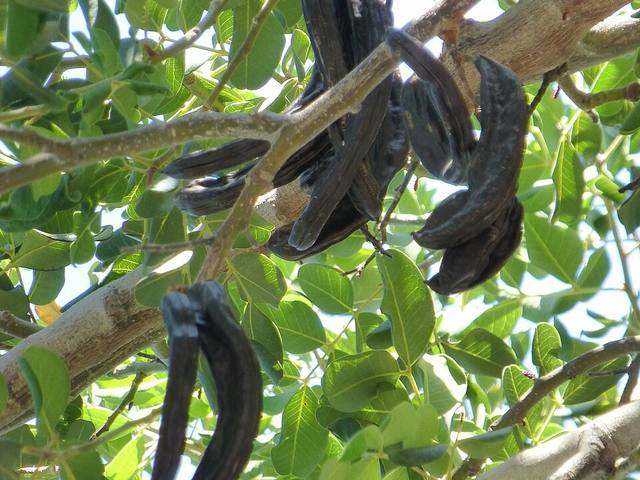
Sweet pods for flour; a drought-proof shade tree.
Hardiness: zones 9 to 11
Light: full sun
Size: about 30 ft tall, 30 ft wide
Harvest: August to October
From: Mediterranean
Drought-hardy once established
Here: Too tender to overwinter outdoors on the Lake Erie shore (zone 6b to 7a): grow it in a pot and bring it in, or treat it as an annual.
Good for: food, wildlife.
Native to: Mediterranean. Hardy in zones 9 to 11.
The story
Carob fed the Mediterranean poor and their goats for millennia; the pods were John the Baptist's locusts in one reading, and the uniform seeds gave jewellers the carat. It makes a chocolate stand-in and a syrup, and asks for nothing.
Planting
Full sun, dry, rocky or alkaline soil, no frost. Plant male and female trees, or a hermaphrodite variety, for pods. Slow to start, then a broad shade tree.
Growing
Water the first two summers, then leave it alone. No pruning needed beyond shaping; it resents wet feet above all.
Harvest and use
Pods ripen dark brown in late summer and fall; gather, dry, and grind the sweet pulp into flour, or simmer for syrup.
What to watch for
Root rot in wet ground; otherwise nearly pest-free.
See if Carob fits your yard
Free planner: enter your ZIP for frost dates, climate fit and a sowing calendar. No account, no ads, no tracking cookies.
More fruit trees
- Prickly pear
- Cornelian cherry
- Kousa dogwood
- Che (Chinese mulberry)
- Wild apple of Kazakhstan
- Siberian apricot
General guidance, not professional advice. Conditions vary by yard and year; for local specifics ask your county extension office. Never eat a wild plant you cannot identify with certainty. Traditional uses are shared as history, not medical advice. © 2026 Sean Priest · Irie Orchard. Terms & credits · Privacy · Home