Loquat
Eriobotrya japonica
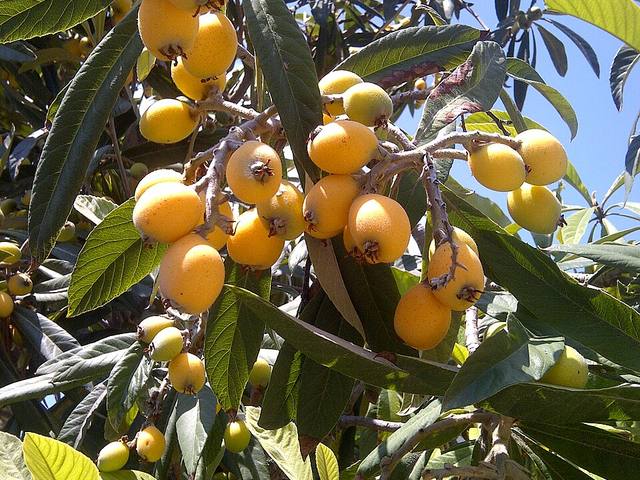
Evergreen; flowers in fall and fruits in late winter.
Hardiness: zones 8 to 10
Light: full sun to part shade
Size: about 20 ft tall, 15 ft wide
Harvest: March to May
From: China
Here: Too tender to overwinter outdoors on the Lake Erie shore (zone 6b to 7a): grow it in a pot and bring it in, or treat it as an annual.
Good for: food, pollinators.
Native to: East Asia. Hardy in zones 8 to 10.
The story
Loquat has been grown in China for a thousand years and became a beloved Japanese fruit, the biwa of early summer; it came to the Mediterranean and California in the 1800s and now grows half-wild in warm cities. The leaves are a traditional cough remedy.
Planting
Full sun or part shade, in drained soil; it tolerates lime. One tree fruits alone. Plant where its evergreen canopy can spread 20 feet.
Growing
Thin the fruit clusters for bigger loquats. Water in dry spells; the fruit sets in winter, so a hard frost during bloom costs the crop.
Harvest and use
Pick in late spring when the fruit is fully orange and soft; the flavour is apricot and plum. It bruises easily and should be eaten within days.
What to watch for
Fire blight in the Southeast, birds, and fruit split after heavy rain.
See if Loquat fits your yard
Free planner: enter your ZIP for frost dates, climate fit and a sowing calendar. No account, no ads, no tracking cookies.
More fruit trees
General guidance, not professional advice. Conditions vary by yard and year; for local specifics ask your county extension office. Never eat a wild plant you cannot identify with certainty. Traditional uses are shared as history, not medical advice. © 2026 Sean Priest · Irie Orchard. Terms & credits · Privacy · Home