Olive
Olea europaea
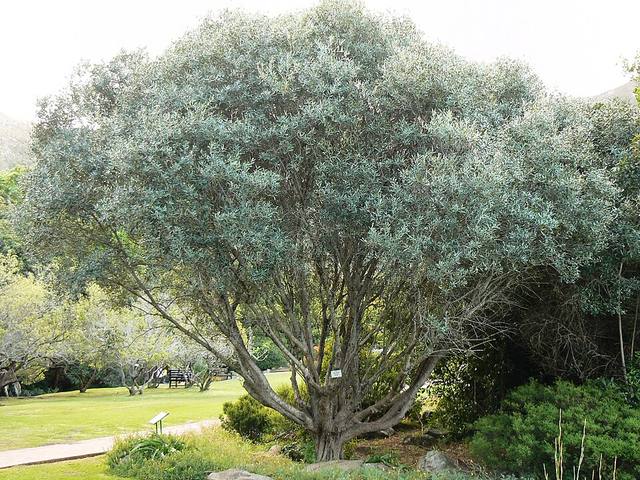
Needs a touch of winter cool to flower; lives for centuries.
Hardiness: zones 8 to 10
Light: full sun
Size: about 20 ft tall, 20 ft wide
Harvest: October to December
From: Mediterranean
Drought-hardy once established
Here: Too tender to overwinter outdoors on the Lake Erie shore (zone 6b to 7a): grow it in a pot and bring it in, or treat it as an annual.
Good for: food.
Native to: Mediterranean, Atlantic islands (Macaronesia). Hardy in zones 8 to 10.
The story
Olives were being pressed on Crete 5,000 years ago and became the fat, the lamp fuel and the peace symbol of the whole Mediterranean. Spanish missions planted them in California in the 1700s; some of those trees still stand.
Planting
Full sun, sharp drainage, and a dry summer. Plant in spring; most varieties fruit alone but crop better in pairs. Keep it small with pruning so you can pick.
Growing
Water deeply but rarely once established. Prune after harvest to open the centre; olives bear on last year's wood. A little compost is plenty.
Harvest and use
Pick green in autumn for firm cured olives or black in early winter for oil and soft-cured. Raw olives are bitter; brine or lye curing takes weeks but is simple.
What to watch for
Olive fruit fly, peacock spot in wet winters, and scale; heavy humid summers cut the crop.
See if Olive fits your yard
Free planner: enter your ZIP for frost dates, climate fit and a sowing calendar. No account, no ads, no tracking cookies.
More fruit trees
General guidance, not professional advice. Conditions vary by yard and year; for local specifics ask your county extension office. Never eat a wild plant you cannot identify with certainty. Traditional uses are shared as history, not medical advice. © 2026 Sean Priest · Irie Orchard. Terms & credits · Privacy · Home