California blackberry
Rubus ursinus
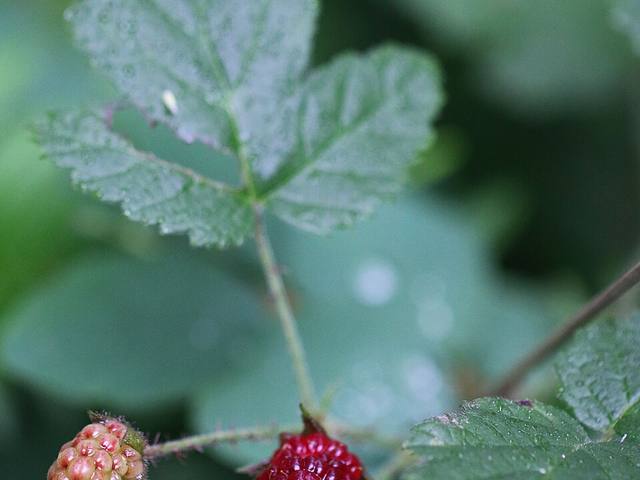
The trailing native blackberry, parent of the loganberry and boysenberry; lets you skip the invasive Himalayan.
Hardiness: zones 6 to 10
Light: part shade
Size: about 2 ft tall, 6 ft wide
Harvest: June to August
From: Pacific coast
Here: Hardy in the Lake Erie shore climate (zone 6b to 7a), so it can live outdoors in the ground.
Good for: food, wildlife.
Native to: California, Pacific Northwest. Hardy in zones 6 to 10.
The story
The California blackberry was eaten fresh and dried by the Ohlone, Pomo and Coast Salish and its leaves and roots used for medicine; it is the native parent of the loganberry, boysenberry and marionberry, and it lets Pacific gardeners skip the invasive Himalayan.
Planting
Part shade or sun, moist soil; plant in spring and give it a fence or let it trail as groundcover. Male and female, so plant several.
Growing
Water in dry spells; cut fruited canes to the ground after harvest. It spreads by tip-rooting.
Harvest and use
Berries ripen black in summer; small, soft, intensely flavoured. Eat fresh or make jam the same day.
What to watch for
Its own spread; otherwise little.
See if California blackberry fits your yard
Free planner: enter your ZIP for frost dates, climate fit and a sowing calendar. No account, no ads, no tracking cookies.
More native and wild plants
- Blue elderberry
- Beach strawberry
- Buransh (tree rhododendron)
- Desert wolfberry
- Cholla (buds)
- Parry's agave
General guidance, not professional advice. Conditions vary by yard and year; for local specifics ask your county extension office. Never eat a wild plant you cannot identify with certainty. Traditional uses are shared as history, not medical advice. © 2026 Sean Priest · Irie Orchard. Terms & credits · Privacy · Home