Cherry of the Rio Grande
Eugenia involucrata
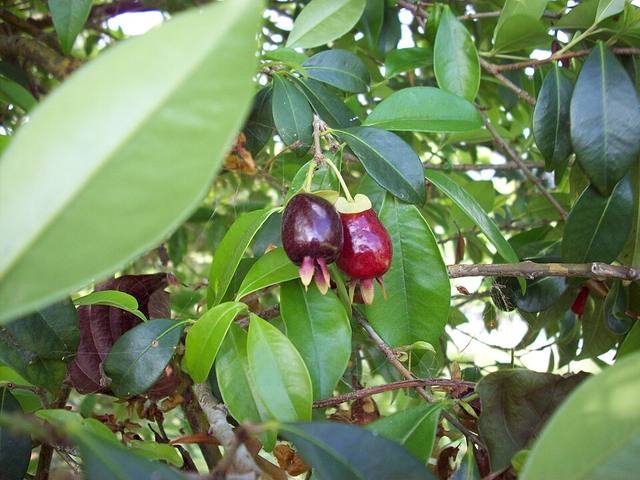
A slender tree with dark spring cherries; one of the hardiest Brazilian myrtles, shrugging off light frost.
Hardiness: zones 8 to 11
Light: full sun
Size: about 20 ft tall, 12 ft wide
Harvest: April to May
From: Southern and southeastern Brazil
Here: Too tender to overwinter outdoors on the Lake Erie shore (zone 6b to 7a): grow it in a pot and bring it in, or treat it as an annual.
Good for: food, pollinators, wildlife.
Native to: Atlantic Forest of Brazil. Hardy in zones 8 to 11.
The story
Cereja-do-rio-grande is named for Rio Grande do Sul, though it grows wild from Minas Gerais south. Researchers at São Paulo universities have studied it alongside grumixama for its antioxidants.
Planting
Full sun, moist, well-drained soil. One of the cold-hardiest Brazilian fruit trees, it shrugs off light frost; grows from fresh seed or a young plant.
Growing
Upright and narrow, so it fits small yards. Water during flowering and fruit set; mulch well.
Harvest and use
Small, shiny red-to-purple cherries in spring with a single seed; eat fresh or make jam and liqueur.
What to watch for
Birds love it. Fruit is delicate and keeps only briefly.
See if Cherry of the Rio Grande fits your yard
Free planner: enter your ZIP for frost dates, climate fit and a sowing calendar. No account, no ads, no tracking cookies.
More fruit trees
- Yamamomo (red bayberry)
- Shikuwasa (Okinawan lime)
- Apple
- Low-chill apple ('Anna', 'Dorsett Golden')
- European pear
- Asian pear
General guidance, not professional advice. Conditions vary by yard and year; for local specifics ask your county extension office. Never eat a wild plant you cannot identify with certainty. Traditional uses are shared as history, not medical advice. © 2026 Sean Priest · Irie Orchard. Terms & credits · Privacy · Home