Swiss chard
Beta vulgaris (Cicla)
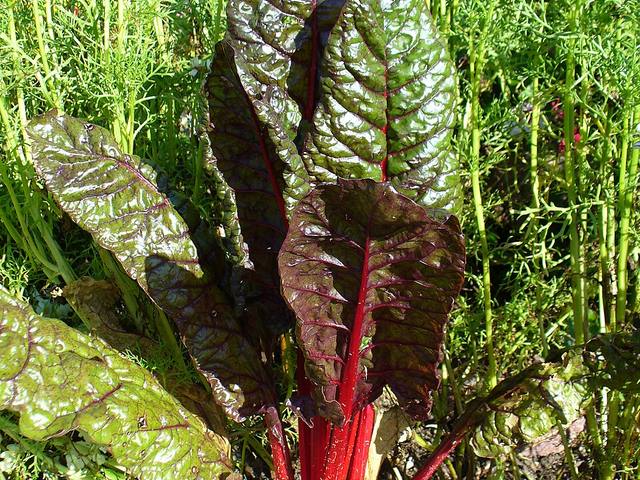
Colorful stems and greens from one sowing all season.
Hardiness: zones 2 to 11
Light: part shade to full sun
Size: about 2 ft tall, 1 ft wide
Harvest: June to November
From: Mediterranean
Here: Hardy in the Lake Erie shore climate (zone 6b to 7a), so it can live outdoors in the ground.
Good for: food.
Hardy in zones 2 to 11.
The story
Chard is the leafy beet the Greeks and Romans grew, called Swiss by a 19th-century seedsman to distinguish it from French spinach; it is the one green that takes both frost and summer heat without bolting.
Planting
Full sun or part shade, rich soil; sow seed directly in spring, an inch deep, and thin to 12 inches; each seed is a cluster.
Growing
Water steadily and feed with compost; cut outer stalks to keep it producing. A spring sowing lasts until hard frost.
Harvest and use
Cut outer leaves at the base from eight weeks on; cook stalks like celery, leaves like spinach.
What to watch for
Leafminers, slugs, and little else.
See if Swiss chard fits your yard
Free planner: enter your ZIP for frost dates, climate fit and a sowing calendar. No account, no ads, no tracking cookies.
More annual vegetables, herbs and grains
General guidance, not professional advice. Conditions vary by yard and year; for local specifics ask your county extension office. Never eat a wild plant you cannot identify with certainty. Traditional uses are shared as history, not medical advice. © 2026 Sean Priest · Irie Orchard. Terms & credits · Privacy · Home