Chilean wine palm
Jubaea chilensis
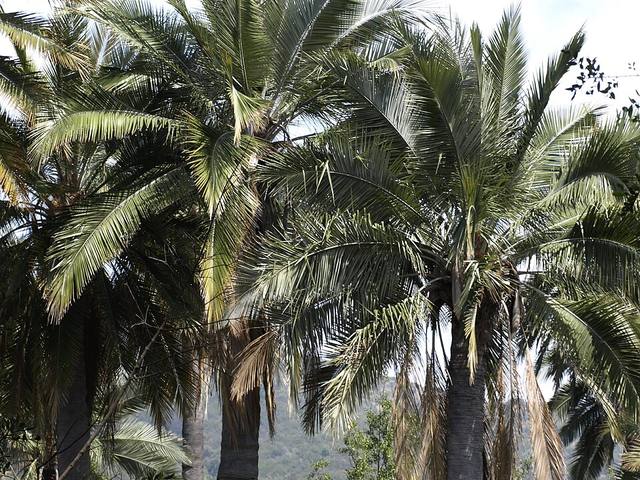
The thickest trunk of any palm, hardy to real frost, dropping coquitos: coconuts the size of a marble.
Hardiness: zones 8 to 10
Light: full sun
Size: about 60 ft tall, 20 ft wide
Harvest: September to October
From: Central Chile
Drought-hardy once established
Here: Too tender to overwinter outdoors on the Lake Erie shore (zone 6b to 7a): grow it in a pot and bring it in, or treat it as an annual.
Good for: food.
Native to: Southern Cone & Patagonia. Hardy in zones 8 to 10.
The story
Darwin called this palm a very ugly tree, and he was wrong. For centuries the trees were felled so their sap could be boiled into palm honey, until few wild groves were left. It is now protected in Chile, and the syrup is made without killing the tree.
Planting
Full sun and deep, well-drained soil. It takes frost into the low teens Fahrenheit once it has a trunk.
Growing
Water young palms well. Then wait: it can be 20 years before the trunk forms and 40 or more before it fruits.
Harvest and use
Coquitos, hard little nuts that taste like coconut, shaken from yellow fruit in autumn. A tree to plant for your grandchildren.
What to watch for
Extremely slow. Transplant only when small.
See if Chilean wine palm fits your yard
Free planner: enter your ZIP for frost dates, climate fit and a sowing calendar. No account, no ads, no tracking cookies.
More nut trees
General guidance, not professional advice. Conditions vary by yard and year; for local specifics ask your county extension office. Never eat a wild plant you cannot identify with certainty. Traditional uses are shared as history, not medical advice. © 2026 Sean Priest · Irie Orchard. Terms & credits · Privacy · Home