Coconut
Cocos nucifera
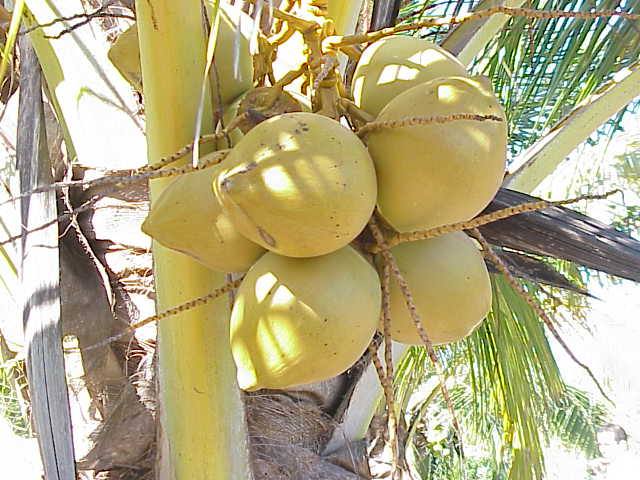
Needs heat, humidity and room.
Hardiness: zones 10 to 12
Light: full sun
Size: about 60 ft tall, 20 ft wide
Harvest: year-round
From: Tropical coasts
Here: Too tender to overwinter outdoors on the Lake Erie shore (zone 6b to 7a): grow it in a pot and bring it in, or treat it as an annual.
Good for: food.
Native to: Hawaiʻi & Pacific Islands, New Guinea & Melanesia. Hardy in zones 10 to 12.
The story
Coconuts floated and sailed across the Indian and Pacific oceans with Austronesian voyagers and were a Polynesian canoe plant: food, drink, oil, rope, thatch and bowls from one palm. On Pacific atolls it is still the tree of life.
Planting
Full sun, sandy drained soil, heat, and humidity; it is a coastal tree that tolerates salt. Plant a sprouted nut on its side, half-buried, or a dwarf variety for a yard.
Growing
Water well in the first years, feed with palm fertilizer, and leave the fronds until they brown. Dwarf palms fruit in four to six years.
Harvest and use
Green nuts at seven months for water; mature brown nuts at a year for flesh and oil. They fall when ripe; keep people and cars clear.
What to watch for
Lethal yellowing disease where present, rhinoceros beetle, and cold; it fails below about 60°F average.
See if Coconut fits your yard
Free planner: enter your ZIP for frost dates, climate fit and a sowing calendar. No account, no ads, no tracking cookies.
More tropical and subtropical food plants
General guidance, not professional advice. Conditions vary by yard and year; for local specifics ask your county extension office. Never eat a wild plant you cannot identify with certainty. Traditional uses are shared as history, not medical advice. © 2026 Sean Priest · Irie Orchard. Terms & credits · Privacy · Home