Elephant foot yam (suran)
Amorphophallus paeoniifolius
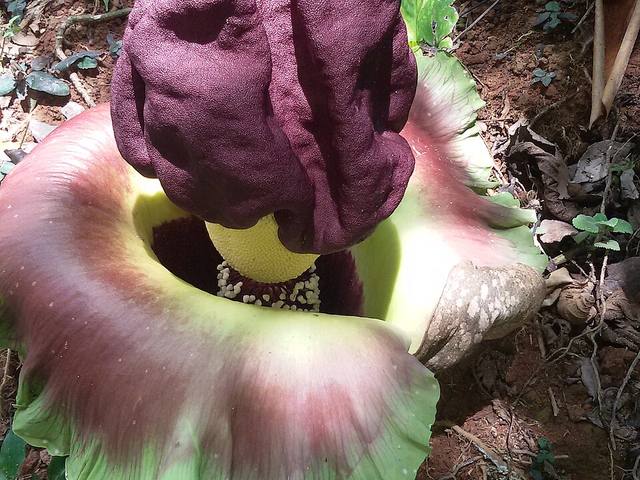
A giant corm for curries, planted at the first monsoon rain and dug after the leaf dies.
Hardiness: zones 10 to 12
Light: part shade
Size: about 4 ft tall, 3 ft wide
Harvest: October to December
From: South Asia
Here: Too tender to overwinter outdoors on the Lake Erie shore (zone 6b to 7a): grow it in a pot and bring it in, or treat it as an annual.
Good for: food.
Native to: South & Southeast Asian tropics. Hardy in zones 10 to 12.
The story
Elephant foot yam has been grown in India and Southeast Asia for thousands of years, planted at the first monsoon rain and dug when the single giant leaf dies; it is the suran of Gujarati and Bengali curries and the jimikand of the north, cooked with tamarind to tame its itch.
Planting
Part shade or sun, rich loose soil, heat, and a wet season; plant a corm piece with a bud at the start of the rains, 6 inches deep.
Growing
Water through the growing season, mulch, and feed with compost. The single leaf reaches 4 feet; stake it in wind.
Harvest and use
Dig the corm, which can reach 20 pounds, when the leaf collapses after 8 to 10 months; peel with gloves and cook thoroughly with something sour.
What to watch for
The itchy raw tissue; rot in waterlogged soil.
See if Elephant foot yam (suran) fits your yard
Free planner: enter your ZIP for frost dates, climate fit and a sowing calendar. No account, no ads, no tracking cookies.
More perennial vegetables, greens and herbs
- Tulsi (holy basil)
- Drumstick (moringa, for pods)
- Timur (Nepal pepper)
- Large cardamom
- Tree collards
- Lemon verbena
General guidance, not professional advice. Conditions vary by yard and year; for local specifics ask your county extension office. Never eat a wild plant you cannot identify with certainty. Traditional uses are shared as history, not medical advice. © 2026 Sean Priest · Irie Orchard. Terms & credits · Privacy · Home