Finger millet (ragi)
Eleusine coracana
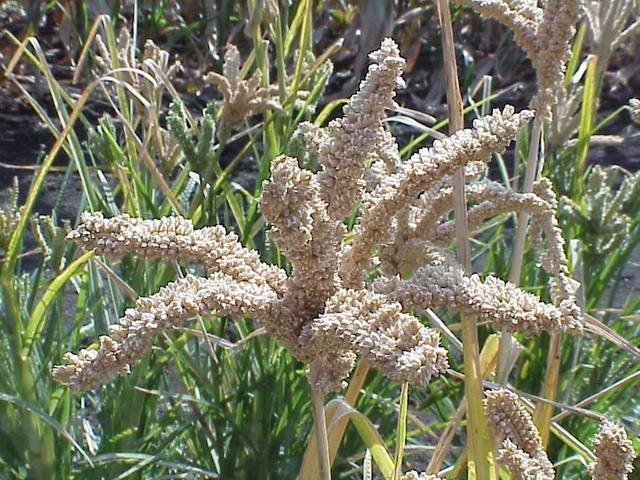
A hardy grain that stores for years; the flour makes ragi mudde and dosa.
Hardiness: zones 7 to 12
Light: full sun
Size: about 4 ft tall, 1 ft wide
Harvest: September to November
From: Ethiopian highlands; a staple of Karnataka and the Himalayan hills
Drought-hardy once established
Here: Hardy in the Lake Erie shore climate (zone 6b to 7a), so it can live outdoors in the ground.
Good for: food.
Native to: South & Southeast Asian tropics, Himalaya & Indian hill country, African savannas & tropics. Hardy in zones 7 to 12.
The story
Finger millet came from the Ethiopian highlands to India 4,000 years ago and became ragi, the staple of Karnataka and the Himalayan hills; it stores for a decade without pests, feeds nursing mothers in porridge, and its straw thatches roofs. Uttarakhand farms it on terraces above the rice.
Planting
Full sun, any drained soil, and a warm season; sow seed directly (it is tiny) after frost, a quarter inch deep, thinned to 6 inches.
Growing
Water modestly; it tolerates drought and poor soil. Weed while small. No feeding.
Harvest and use
Cut the finger-like heads when brown, 100 to 120 days; dry, thresh, and grind. The grain keeps for years.
What to watch for
Birds and blast disease in wet weather.
See if Finger millet (ragi) fits your yard
Free planner: enter your ZIP for frost dates, climate fit and a sowing calendar. No account, no ads, no tracking cookies.
More annual vegetables, herbs and grains
General guidance, not professional advice. Conditions vary by yard and year; for local specifics ask your county extension office. Never eat a wild plant you cannot identify with certainty. Traditional uses are shared as history, not medical advice. © 2026 Sean Priest · Irie Orchard. Terms & credits · Privacy · Home