American ginseng
Panax quinquefolius
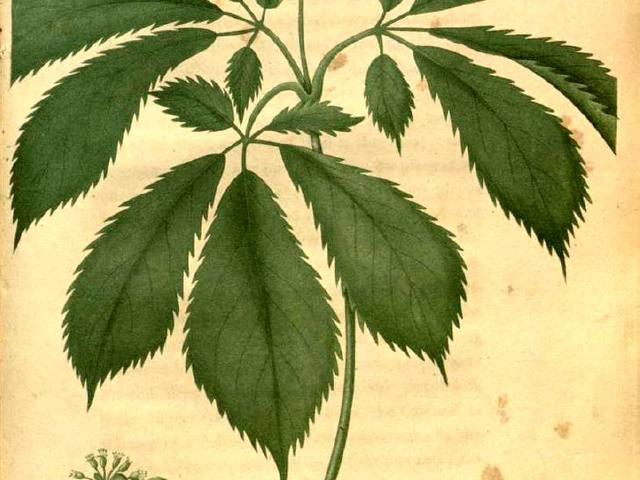
A slow root for deep forest shade; buy cultivated seed, never dig wild plants.
Hardiness: zones 3 to 8
Light: shade
Size: about 1.5 ft tall, 1 ft wide
Harvest: September
From: E. North America
Here: Hardy in the Lake Erie shore climate (zone 6b to 7a), so it can live outdoors in the ground.
Good for: food, traditional use.
Native to: Northeast, Midwest & Great Lakes, Southeast, Eastern Canada. Hardy in zones 3 to 8.
The story
American ginseng grows in the deep shade of eastern hardwood forests and has been dug and sold to China since the 1700s; Daniel Boone traded it by the ton. That trade nearly emptied the woods, and wild plants are now protected or regulated in most states.
Planting
Sow stratified seed in fall, an inch deep, under maples or tulip trees on a north or east slope with rich, moist, well-drained soil and at least 75 percent shade.
Growing
Leave the leaf litter on as mulch and otherwise leave it alone. It grows one new leaf prong every year or two.
Harvest and use
Roots are dug after 7 to 10 years, in fall, once the berries have ripened and been replanted. It is a traditional tonic root in both Cherokee and Chinese practice. Grow your own from cultivated seed; never dig wild plants.
What to watch for
Poachers, deer, slugs and root rot. Check your state's rules before selling any.
Safety
Ginseng can interact with blood thinners such as warfarin and with diabetes medicines. Wild American ginseng is protected: digging it is regulated by season, age and permit, so grow your own from nursery roots or seed.
Medicinal uses here are shared as history, not advice. Kitchen amounts are fine for most people, but teas, tinctures and supplements can interact with medicines and aren't safe for everyone, especially in pregnancy, while breastfeeding, for children, or with liver or kidney problems. Ask a doctor or pharmacist before taking any plant as medicine.
See if American ginseng fits your yard
Free planner: enter your ZIP for frost dates, climate fit and a sowing calendar. No account, no ads, no tracking cookies.
More native and wild plants
General guidance, not professional advice. Conditions vary by yard and year; for local specifics ask your county extension office. Never eat a wild plant you cannot identify with certainty. Traditional uses are shared as history, not medical advice. © 2026 Sean Priest · Irie Orchard. Terms & credits · Privacy · Home