Golden currant (clove currant)
Ribes aureum
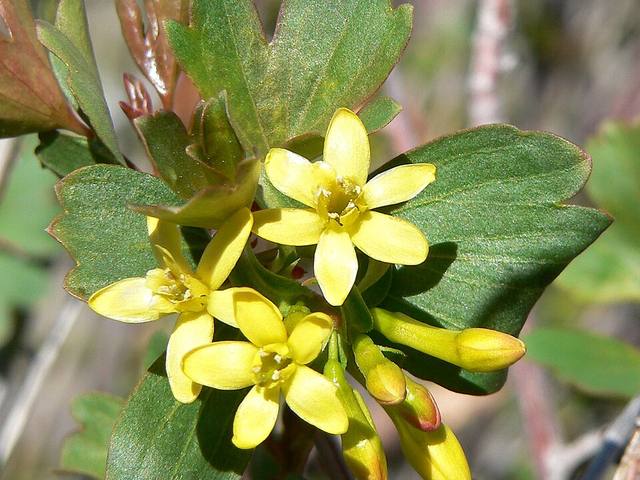
Clove-scented yellow flowers in spring, then sweet black or gold berries; shrugs off drought and cold.
Hardiness: zones 2 to 8
Light: full sun to part shade
Size: about 6 ft tall, 5 ft wide
Harvest: July to August
From: W. and central North America
Drought-hardy once established
Here: Hardy in the Lake Erie shore climate (zone 6b to 7a), so it can live outdoors in the ground.
Good for: food, pollinators, wildlife.
Native to: Great Plains & Texas, Rockies & Great Basin, Desert Southwest, California, Pacific Northwest, Western Canada. Hardy in zones 2 to 8.
The story
Golden currant was gathered by Lakota, Blackfoot and Shoshone peoples and dried into cakes or mixed with meat; Lewis and Clark collected it in 1806 and its clove-scented yellow flowers made it a 19th-century garden favourite. It takes drought and alkaline soil.
Planting
Full sun or part shade, any drained soil, including dry and poor. Plant in spring; self-fertile, suckering, to 6 feet.
Growing
Water the first year, then little. Prune out old stems every few years. It resists the mildew that plagues European currants.
Harvest and use
Berries ripen gold to black in midsummer; sweet-tart, good fresh, dried, or as jam. Flowers scent the whole yard in spring.
What to watch for
Currant aphid curling leaves; birds.
See if Golden currant (clove currant) fits your yard
Free planner: enter your ZIP for frost dates, climate fit and a sowing calendar. No account, no ads, no tracking cookies.
More berries and small fruit
- Dog rose
- Andean blueberry (mortiño)
- Andean elderberry (sauco)
- Atherton raspberry
- Nanking cherry
- Bog bilberry
General guidance, not professional advice. Conditions vary by yard and year; for local specifics ask your county extension office. Never eat a wild plant you cannot identify with certainty. Traditional uses are shared as history, not medical advice. © 2026 Sean Priest · Irie Orchard. Terms & credits · Privacy · Home