Guava
Psidium guajava
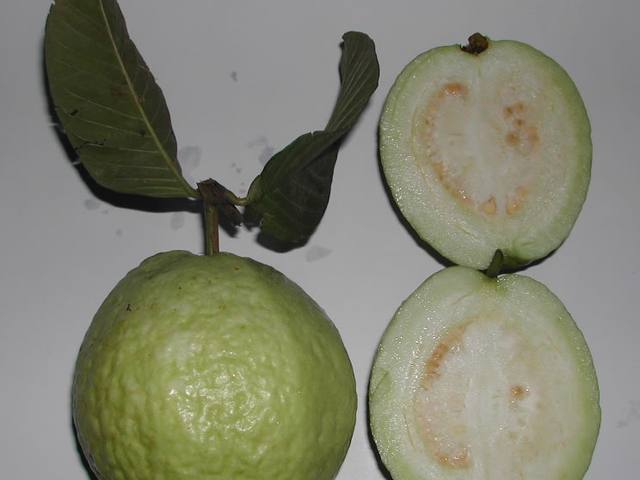
Perfumes a whole kitchen; tough and quick to bear.
Hardiness: zones 9 to 11
Light: full sun
Size: about 15 ft tall, 15 ft wide
Harvest: August to October
From: Tropical America
Drought-hardy once established
Here: Too tender to overwinter outdoors on the Lake Erie shore (zone 6b to 7a): grow it in a pot and bring it in, or treat it as an annual.
Good for: food, pollinators.
Native to: Mexico, Central America & the Caribbean, Tropical South America. Hardy in zones 9 to 11.
The story
Guava was domesticated in tropical America and spread by the Spanish and Portuguese so fast that it went wild across the Old World tropics within a century. In Hawaiʻi, Cuba and India it is jam, juice, and the backyard fruit everyone has.
Planting
Full sun and any drained soil; it takes a light frost once established. One tree fruits alone. Keep it small by pruning.
Growing
Water in dry spells and feed lightly; it is tough. Prune after harvest to control size and encourage new wood, which carries the fruit.
Harvest and use
Pick when the skin softens and the perfume fills the room; the fruit ripens in a few days off the tree. Eat fresh, or make the classic pink paste.
What to watch for
Fruit fly in warm regions, guava rust in wet climates, and cold below about 27°F.
See if Guava fits your yard
Free planner: enter your ZIP for frost dates, climate fit and a sowing calendar. No account, no ads, no tracking cookies.
More tropical and subtropical food plants
General guidance, not professional advice. Conditions vary by yard and year; for local specifics ask your county extension office. Never eat a wild plant you cannot identify with certainty. Traditional uses are shared as history, not medical advice. © 2026 Sean Priest · Irie Orchard. Terms & credits · Privacy · Home