Guduchi (giloy)
Tinospora cordifolia
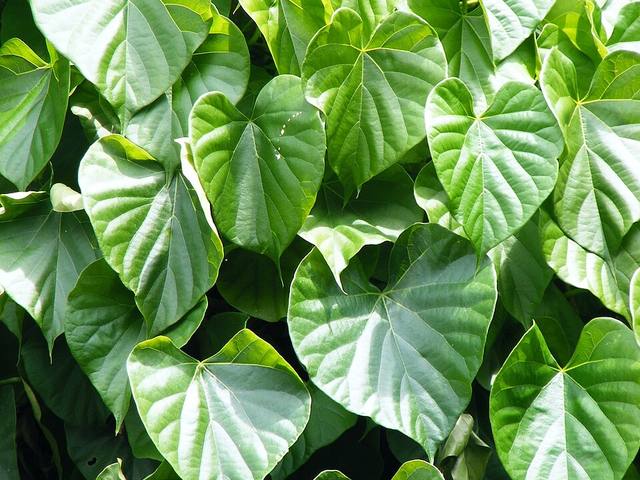
A heart-leaved twining vine, climbing neem and mango trees in Indian villages; the stem is the part used.
Hardiness: zones 10 to 12
Light: part shade
Size: about 30 ft tall, 5 ft wide
From: India and Sri Lanka
Drought-hardy once established
Here: Too tender to overwinter outdoors on the Lake Erie shore (zone 6b to 7a): grow it in a pot and bring it in, or treat it as an annual.
Good for: traditional use, Ayurvedic tradition.
Native to: South & Southeast Asian tropics. Hardy in zones 10 to 12.
The story
Guduchi, also called giloy or amrita, is a twining vine with heart-shaped leaves, often found draped over a neem tree. Ayurveda prizes the stem as a bitter tonic, and it grows from a cutting stuck in the ground.
Planting
Warm, sunny to part-shade position with a tree, fence or trellis to climb. Hardy only in the warmest zones; otherwise grow in a big pot indoors in winter.
Growing
Water moderately and let it climb; it sends down aerial roots. Prune to keep it in bounds, and start new plants from stem cuttings.
Harvest and use
Mature stems, about as thick as a pencil, are cut and used fresh or dried. Traditional use only; ask a clinician first if you take medication.
What to watch for
Frost and soggy winter soil.
Safety
Liver injury has been reported in people taking guduchi (giloy) supplements.
Medicinal uses here are shared as history, not advice. Kitchen amounts are fine for most people, but teas, tinctures and supplements can interact with medicines and aren't safe for everyone, especially in pregnancy, while breastfeeding, for children, or with liver or kidney problems. Ask a doctor or pharmacist before taking any plant as medicine.
See if Guduchi (giloy) fits your yard
Free planner: enter your ZIP for frost dates, climate fit and a sowing calendar. No account, no ads, no tracking cookies.
More perennial vegetables, greens and herbs
- Hoja santa
- Mexican oregano
- Pericón (Mexican tarragon)
- Izote (spineless yucca)
- Pūhā (native sow thistle)
- Sea celery (tūtae kōau)
General guidance, not professional advice. Conditions vary by yard and year; for local specifics ask your county extension office. Never eat a wild plant you cannot identify with certainty. Traditional uses are shared as history, not medical advice. © 2026 Sean Priest · Irie Orchard. Terms & credits · Privacy · Home