Pericón (Mexican tarragon)
Tagetes lucida
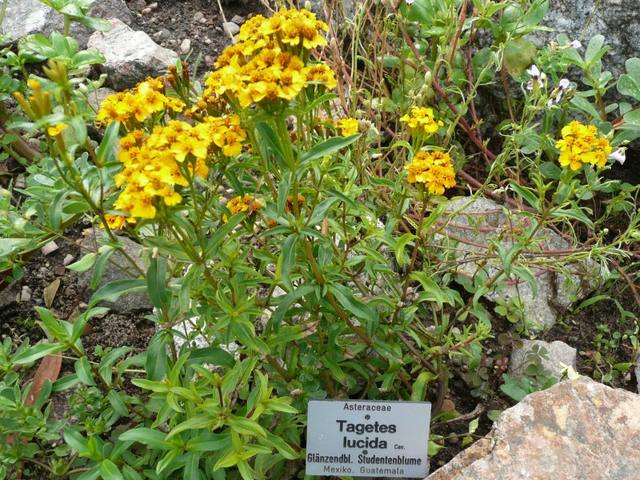
Anise-scented leaves that stand in for tarragon where summers are too hot for the French kind.
Hardiness: zones 8 to 11
Light: full sun
Size: about 2.5 ft tall, 1.5 ft wide
Harvest: May to October
From: Mexico and Guatemala
Drought-hardy once established
Here: Too tender to overwinter outdoors on the Lake Erie shore (zone 6b to 7a): grow it in a pot and bring it in, or treat it as an annual.
Good for: food, pollinators, traditional use.
Native to: Mexico, Central America & the Caribbean. Hardy in zones 8 to 11.
The story
Pericón was a sacred plant of the Aztecs, who called it yauhtli. In central Mexico, crosses woven from its yellow flowers are still hung on doors and at the corners of cornfields in late September to guard the harvest.
Planting
Full sun and average, well-drained soil. Treat it as an annual where winters are hard.
Growing
It thrives in heat and humidity that kill French tarragon. Cut it back in midsummer to keep it compact.
Harvest and use
Use the leaves fresh wherever tarragon is called for: chicken, eggs, vinegar. The flowers and leaves make an anise-scented tea, and it is a traditional herb of Mexican households.
What to watch for
Soggy soil. It flowers late, so in the north frost may come first.
Safety
Medicinal uses here are shared as history, not advice. Kitchen amounts are fine for most people, but teas, tinctures and supplements can interact with medicines and aren't safe for everyone, especially in pregnancy, while breastfeeding, for children, or with liver or kidney problems. Ask a doctor or pharmacist before taking any plant as medicine.
See if Pericón (Mexican tarragon) fits your yard
Free planner: enter your ZIP for frost dates, climate fit and a sowing calendar. No account, no ads, no tracking cookies.
More perennial vegetables, greens and herbs
- Izote (spineless yucca)
- Pūhā (native sow thistle)
- Sea celery (tūtae kōau)
- Wild rosemary (kapokbos)
- Rose geranium
- Veldkool
General guidance, not professional advice. Conditions vary by yard and year; for local specifics ask your county extension office. Never eat a wild plant you cannot identify with certainty. Traditional uses are shared as history, not medical advice. © 2026 Sean Priest · Irie Orchard. Terms & credits · Privacy · Home