Himalayan barberry (chutro)
Berberis aristata
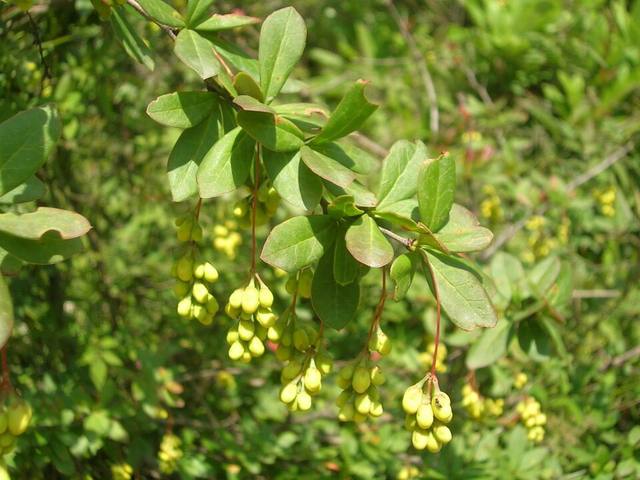
Yellow spring flowers, then blue-purple berries that hill children eat by the handful.
Hardiness: zones 6 to 9
Light: full sun
Size: about 10 ft tall, 8 ft wide
Harvest: June to July
From: Himalaya
Drought-hardy once established
Here: Hardy in the Lake Erie shore climate (zone 6b to 7a), so it can live outdoors in the ground.
Good for: food, pollinators, wildlife, Ayurvedic tradition.
Native to: Himalaya & Indian hill country. Hardy in zones 6 to 9.
The story
The yellow wood of this barberry is daruharidra, tree turmeric, in Ayurveda, and it gives a strong yellow dye. To children herding goats in the hills it is simply chutro, the bush with the good berries.
Planting
Full sun and well-drained soil. It takes drought and cold.
Growing
It needs no care. Thin old stems after fruiting, wearing gloves.
Harvest and use
Purple-blue berries in early summer, sweet and sharp, eaten fresh or dried like raisins.
What to watch for
Thorns. Check local rules before planting any barberry, since some kinds carry a wheat rust.
See if Himalayan barberry (chutro) fits your yard
Free planner: enter your ZIP for frost dates, climate fit and a sowing calendar. No account, no ads, no tracking cookies.
More berries and small fruit
- Muntries
- Miracle berry
- Azores blueberry (uva-da-serra)
- Madeira blueberry (uveira-da-serra)
- Bush cherry
- Highbush blueberry
General guidance, not professional advice. Conditions vary by yard and year; for local specifics ask your county extension office. Never eat a wild plant you cannot identify with certainty. Traditional uses are shared as history, not medical advice. © 2026 Sean Priest · Irie Orchard. Terms & credits · Privacy · Home