Miracle berry
Synsepalum dulcificum
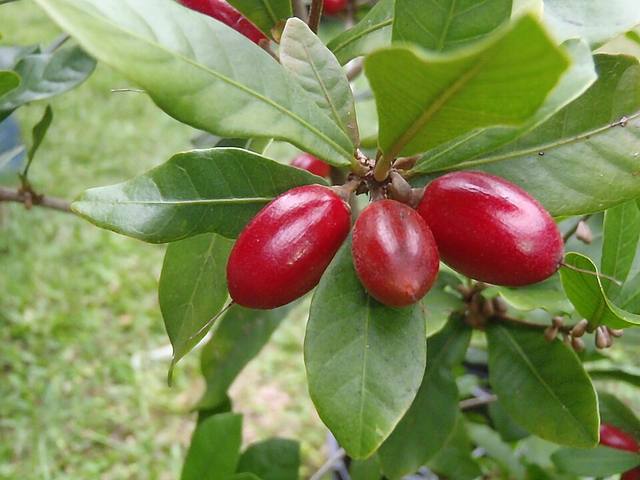
Eat one red berry and lemons taste sweet for half an hour; a slow, tidy shrub for acid soil or a pot.
Hardiness: zones 10 to 12
Light: part shade
Size: about 10 ft tall, 6 ft wide
Harvest: year-round
From: West African forests
Here: Too tender to overwinter outdoors on the Lake Erie shore (zone 6b to 7a): grow it in a pot and bring it in, or treat it as an annual.
Good for: food, wildlife.
Native to: West & Central African forests. Hardy in zones 10 to 12.
The story
Miracle berry grows in the forests of West Africa, where the berries have long been chewed before eating sour palm wine or kenkey. A protein in the fruit, miraculin, makes sour foods taste sweet for half an hour or so.
Planting
Part shade, acid, well-drained soil (pH 4.5 to 5.8), steady warmth and humidity. Does well in a large pot of acid mix.
Growing
Slow-growing and tidy. Water with rainwater if your tap water is hard; feed lightly.
Harvest and use
Small red berries on and off through the year; let one dissolve on your tongue, then taste a lemon.
What to watch for
Yellow leaves usually mean the soil is not acid enough.
See if Miracle berry fits your yard
Free planner: enter your ZIP for frost dates, climate fit and a sowing calendar. No account, no ads, no tracking cookies.
More berries and small fruit
- Azores blueberry (uva-da-serra)
- Madeira blueberry (uveira-da-serra)
- Bush cherry
- Highbush blueberry
- Rabbiteye blueberry
- Southern highbush blueberry
General guidance, not professional advice. Conditions vary by yard and year; for local specifics ask your county extension office. Never eat a wild plant you cannot identify with certainty. Traditional uses are shared as history, not medical advice. © 2026 Sean Priest · Irie Orchard. Terms & credits · Privacy · Home