Kukui (candlenut)
Aleurites moluccanus
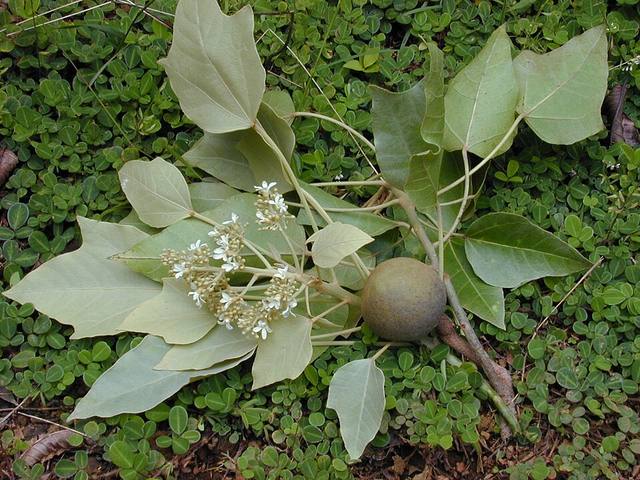
Hawaii's state tree: roasted nuts for inamona relish, oil for lamps. Never eat it raw.
Hardiness: zones 10 to 12
Light: full sun
Size: about 60 ft tall, 50 ft wide
Harvest: year-round
From: Malesia; carried to Hawaii by Polynesian voyagers
Here: Too tender to overwinter outdoors on the Lake Erie shore (zone 6b to 7a): grow it in a pot and bring it in, or treat it as an annual.
Good for: food, wildlife.
Native to: Hawaiʻi & Pacific Islands, South & Southeast Asian tropics, New Guinea & Melanesia. Hardy in zones 10 to 12.
The story
Kukui was a canoe plant carried to Hawaiʻi by the first Polynesian voyagers, who roasted the nuts for inamona relish, burned them strung on a midrib as candles, used the oil on skin and canoes, and the bark for dye and medicine; it is Hawaiʻi's state tree and its leis mean peace.
Planting
Full sun, drained soil, heat, and humidity; a fast tree to 60 feet with silvery leaves. Plant seed in the tropics.
Growing
Water young trees; mature ones need nothing. Prune to keep it out of the wind's way; the limbs are brittle.
Harvest and use
Nuts fall year-round; dry, crack, and roast thoroughly before eating. Raw kukui is a strong purgative, so eat it only roasted and in small amounts.
What to watch for
Raw nuts, brittle limbs, and cold.
See if Kukui (candlenut) fits your yard
Free planner: enter your ZIP for frost dates, climate fit and a sowing calendar. No account, no ads, no tracking cookies.
More nut trees
- Breadnut (Maya nut)
- Chilgoza pine
- Himalayan hazel
- Pehuén (monkey puzzle)
- Avellano (Chilean hazelnut)
- Tahitian chestnut (mape, ivi)
General guidance, not professional advice. Conditions vary by yard and year; for local specifics ask your county extension office. Never eat a wild plant you cannot identify with certainty. Traditional uses are shared as history, not medical advice. © 2026 Sean Priest · Irie Orchard. Terms & credits · Privacy · Home