Tahitian chestnut (mape, ivi)
Inocarpus fagifer
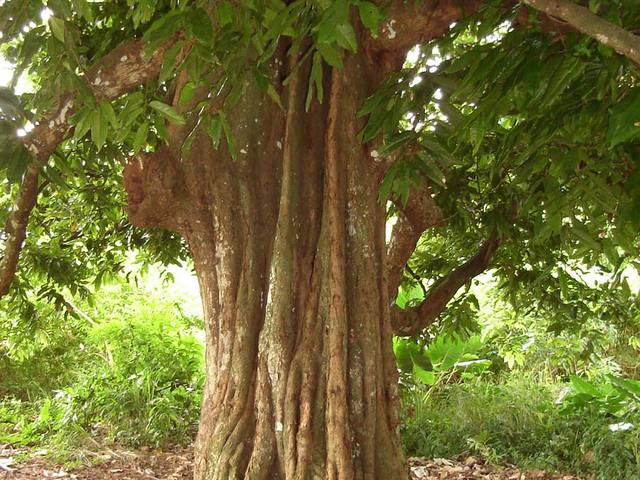
A buttressed streamside tree whose large kidney-shaped seeds are boiled or roasted across the Pacific.
Hardiness: zones 11 to 12
Light: part shade
Size: about 60 ft tall, 40 ft wide
Harvest: January to April
From: Malesia and the Pacific Islands
Here: Too tender to overwinter outdoors on the Lake Erie shore (zone 6b to 7a): grow it in a pot and bring it in, or treat it as an annual.
Good for: food, wildlife, fixing nitrogen in the soil.
Native to: Hawaiʻi & Pacific Islands, South & Southeast Asian tropics, New Guinea & Melanesia. Hardy in zones 11 to 12.
The story
The Tahitian chestnut lines streams from Indonesia to the Marquesas. Its seeds were a staple in parts of Melanesia and Polynesia, and its buttressed trunks were struck as signal drums in Tahiti.
Planting
A humid tropical lowland, sun or part shade and moist soil; it tolerates wet ground and salt wind.
Growing
Little care. It fixes nitrogen and gives dense shade.
Harvest and use
Gather the fallen pods, then boil, roast or bake the large seed in its husk. It tastes like a chestnut.
What to watch for
The seed is not eaten raw. Cooked seeds keep only a day or two.
See if Tahitian chestnut (mape, ivi) fits your yard
Free planner: enter your ZIP for frost dates, climate fit and a sowing calendar. No account, no ads, no tracking cookies.
More nut trees
General guidance, not professional advice. Conditions vary by yard and year; for local specifics ask your county extension office. Never eat a wild plant you cannot identify with certainty. Traditional uses are shared as history, not medical advice. © 2026 Sean Priest · Irie Orchard. Terms & credits · Privacy · Home