Mamey sapote
Pouteria sapota
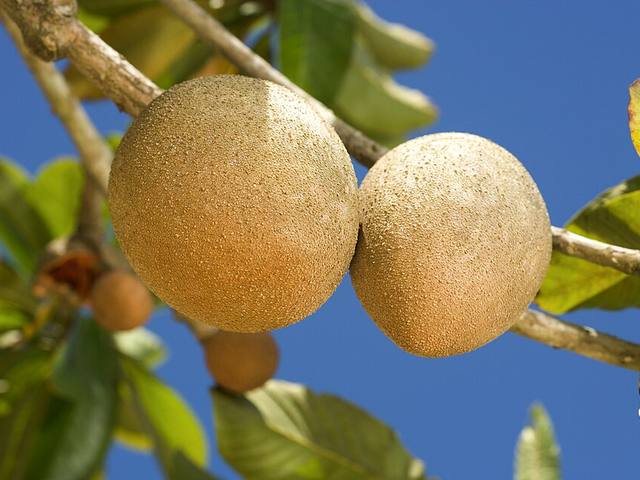
Salmon-pink flesh like sweet potato pie; the batido fruit of Cuba and Miami.
Hardiness: zones 10 to 12
Light: full sun
Size: about 60 ft tall, 35 ft wide
Harvest: March to June
From: Mexico and Central America
Drought-hardy once established
Here: Too tender to overwinter outdoors on the Lake Erie shore (zone 6b to 7a): grow it in a pot and bring it in, or treat it as an annual.
Good for: food.
Native to: Mexico, Central America & the Caribbean. Hardy in zones 10 to 12.
The story
Mamey sapote was a staple of the Maya and Aztec, its salmon-coloured flesh eaten fresh and its big seed ground into a flavouring for chocolate; it is the batido flavour of Cuba and Miami and grows wild in the forests of southern Mexico and Central America.
Planting
Full sun, deep, drained soil, heat, and humidity; no frost. Plant a grafted variety; seedlings take 8 years and grow to 60 feet.
Growing
Water through dry spells and mulch; prune young trees to keep them low. It flowers and fruits across a long season and takes 13 to 24 months to ripen a fruit.
Harvest and use
Scratch the brown skin: salmon underneath means ripe, green means wait. Pick and soften indoors a few days; eat fresh or blend into batidos.
What to watch for
Cold below about 28°F, fruit drop in drought.
See if Mamey sapote fits your yard
Free planner: enter your ZIP for frost dates, climate fit and a sowing calendar. No account, no ads, no tracking cookies.
More tropical and subtropical food plants
- Canistel (eggfruit)
- Black sapote
- Allspice (pimienta gorda)
- Cas (sour Costa Rican guava)
- Sweet granadilla
- Naranjilla (lulo)
General guidance, not professional advice. Conditions vary by yard and year; for local specifics ask your county extension office. Never eat a wild plant you cannot identify with certainty. Traditional uses are shared as history, not medical advice. © 2026 Sean Priest · Irie Orchard. Terms & credits · Privacy · Home