Mountain apple (ʻōhiʻa ʻai)
Syzygium malaccense
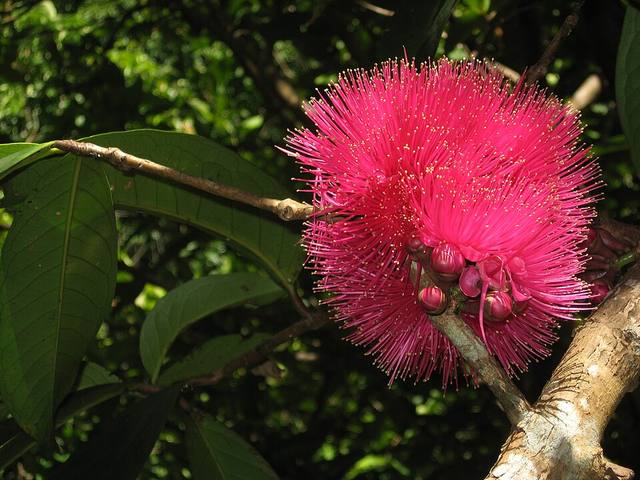
Crisp, rose-scented fruit from a tree Hawaiians have grown for a thousand years.
Hardiness: zones 10 to 12
Light: full sun to part shade
Size: about 40 ft tall, 25 ft wide
Harvest: June to September
From: Malesia; a Polynesian canoe plant
Here: Too tender to overwinter outdoors on the Lake Erie shore (zone 6b to 7a): grow it in a pot and bring it in, or treat it as an annual.
Good for: food, pollinators.
Native to: Hawaiʻi & Pacific Islands, South & Southeast Asian tropics, New Guinea & Melanesia. Hardy in zones 10 to 12.
The story
Mountain apple was a canoe plant of the Polynesians, who carried it from Malesia to Hawaiʻi and planted it in the wet valleys; Hawaiians ate the crisp pink fruit, made a dye from the bark, and used the tree in medicine. It grows wild in the uplands of every island.
Planting
Full sun or part shade, moist rich soil, heat, humidity, and shelter from wind; a 40-foot tree. Plant a seedling in the wet tropics.
Growing
Water steadily and mulch; prune to keep it in reach. The red powder-puff flowers come in spring.
Harvest and use
Fruit ripens red in summer, sometimes twice a year; crisp, watery, rose-scented. Eat within a day or two of picking.
What to watch for
Wind, drought, and cold.
See if Mountain apple (ʻōhiʻa ʻai) fits your yard
Free planner: enter your ZIP for frost dates, climate fit and a sowing calendar. No account, no ads, no tracking cookies.
More tropical and subtropical food plants
- Plantain (cooking banana)
- Kokum
- White sapote
- Cold-hardy avocado ('Bacon', 'Mexicola')
- Noni (Tahitian noni)
- Jocote
General guidance, not professional advice. Conditions vary by yard and year; for local specifics ask your county extension office. Never eat a wild plant you cannot identify with certainty. Traditional uses are shared as history, not medical advice. © 2026 Sean Priest · Irie Orchard. Terms & credits · Privacy · Home