White sapote
Casimiroa edulis
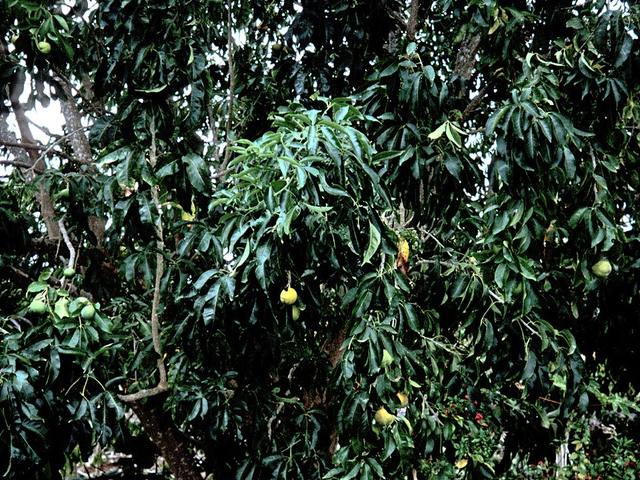
Custard-sweet fruit from a tree that takes cool summers and light frost; made for the Bay Area.
Hardiness: zones 9 to 11
Light: full sun
Size: about 25 ft tall, 25 ft wide
Harvest: August to November
From: Mexican highlands
Drought-hardy once established
Here: Too tender to overwinter outdoors on the Lake Erie shore (zone 6b to 7a): grow it in a pot and bring it in, or treat it as an annual.
Good for: food.
Native to: Mexico, Central America & the Caribbean. Hardy in zones 9 to 11.
The story
White sapote grew in the highlands of central Mexico, where the Aztec called it cochiztzapotl, the sleep-making sapote, for its mildly sedative seeds and leaves; Spanish friars carried it to California missions, and it fruits in cool coastal climates where tropical sapotes fail.
Planting
Full sun, drained soil, and a mild climate with light frost; it takes 25°F once mature. Plant a grafted variety ('Suebelle', 'Vernon'); a 25-foot tree.
Growing
Water deeply but infrequently; mulch. Prune to keep it low. It drops leaves and fruit in drought.
Harvest and use
Fruit ripens from late summer into winter, turning pale yellow-green and softening; pick and ripen indoors. Custard-sweet; spoon out the flesh, discard the seeds.
What to watch for
Fruit fly, and fruit drop in heat; the seeds are not edible.
See if White sapote fits your yard
Free planner: enter your ZIP for frost dates, climate fit and a sowing calendar. No account, no ads, no tracking cookies.
More tropical and subtropical food plants
- Cold-hardy avocado ('Bacon', 'Mexicola')
- Noni (Tahitian noni)
- Jocote
- Nance
- Mamey sapote
- Canistel (eggfruit)
General guidance, not professional advice. Conditions vary by yard and year; for local specifics ask your county extension office. Never eat a wild plant you cannot identify with certainty. Traditional uses are shared as history, not medical advice. © 2026 Sean Priest · Irie Orchard. Terms & credits · Privacy · Home