Mountain pepper (pepperberry)
Tasmannia lanceolata
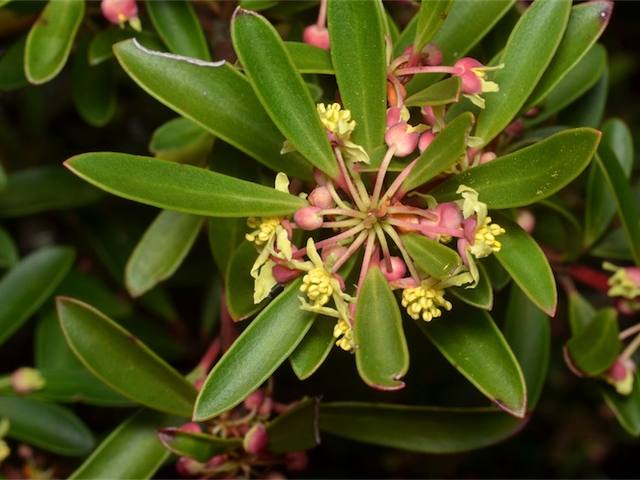
Red stems, glossy leaves and black berries that start sweet and then set your mouth alight.
Hardiness: zones 7 to 10
Light: part shade
Size: about 12 ft tall, 8 ft wide
Harvest: September to November
From: Tasmania and the southeast Australian highlands
Here: Hardy in the Lake Erie shore climate (zone 6b to 7a), so it can live outdoors in the ground.
Good for: food, wildlife.
Native to: Australia. Hardy in zones 7 to 10.
The story
Mountain pepper grows in the cool, wet forests of Tasmania and the southeast highlands. Its heat comes from a compound unrelated to pepper or chili. Aboriginal peoples used the plant, and settlers ground the berries when their pepper ran out.
Planting
Part shade, shelter and moist, acid, humus-rich soil. Plant a male and a female for berries.
Growing
Keep it moist and mulched. Clip it lightly for a hedge.
Harvest and use
Dry the leaves as a milder, herby spice. Pick the black berries in autumn and dry them: first sweet, then a slow heat that builds. Use sparingly.
What to watch for
Drought, hot sun and wind.
See if Mountain pepper (pepperberry) fits your yard
Free planner: enter your ZIP for frost dates, climate fit and a sowing calendar. No account, no ads, no tracking cookies.
More perennial vegetables, greens and herbs
- Bush tomato (kutjera)
- Anise myrtle
- Cretan dittany (diktamo)
- Bitter leaf
- Fluted pumpkin (ugu)
- Grains of paradise (alligator pepper)
General guidance, not professional advice. Conditions vary by yard and year; for local specifics ask your county extension office. Never eat a wild plant you cannot identify with certainty. Traditional uses are shared as history, not medical advice. © 2026 Sean Priest · Irie Orchard. Terms & credits · Privacy · Home