New Jersey tea
Ceanothus americanus
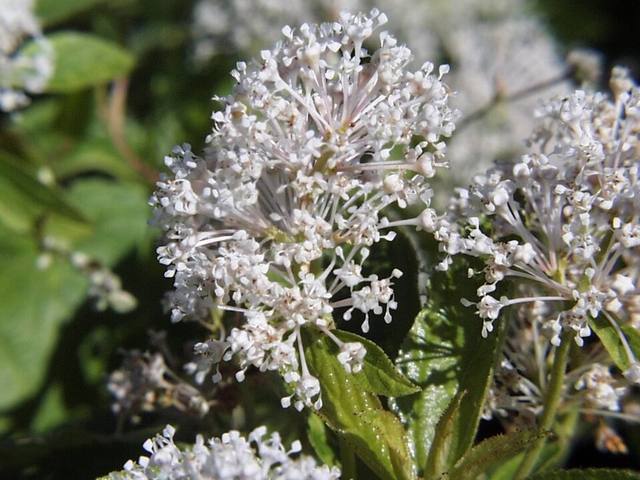
A small nitrogen fixer; the leaves were a Revolution-era tea substitute.
Hardiness: zones 4 to 8
Light: full sun
Size: about 3 ft tall, 4 ft wide
From: E. North America
Drought-hardy once established
Here: Hardy in the Lake Erie shore climate (zone 6b to 7a), so it can live outdoors in the ground.
Good for: fixing nitrogen in the soil, pollinators, butterfly and moth caterpillars.
Native to: Northeast, Southeast, Midwest & Great Lakes, Great Plains & Texas, Eastern Canada. Hardy in zones 4 to 8.
The story
After the Boston Tea Party, patriots needed something to pour, and the dried leaves of this little shrub became the best-known substitute. It has no caffeine, but it brews into a pleasant tea that tastes a good deal like the real thing.
Planting
Full sun and dry, sandy or rocky soil. Plant it small and leave it; the deep red root hates moving.
Growing
No fertilizer; it fixes its own nitrogen. Protect young plants from rabbits and deer.
Harvest and use
Frothy white flowers in early summer, crowded with tiny native bees and wasps, and a host plant for several azure butterflies. Pick leaves in bloom and dry them for tea.
What to watch for
Rabbits. Wet soil.
See if New Jersey tea fits your yard
Free planner: enter your ZIP for frost dates, climate fit and a sowing calendar. No account, no ads, no tracking cookies.
More native and wild plants
General guidance, not professional advice. Conditions vary by yard and year; for local specifics ask your county extension office. Never eat a wild plant you cannot identify with certainty. Traditional uses are shared as history, not medical advice. © 2026 Sean Priest · Irie Orchard. Terms & credits · Privacy · Home